Two-Step Textual Similarity-Based Approach for Predicting Suitable Production Line for a Newly Designed Product
Keywords:
similarity, predictive analytics, industry 4.0Abstract
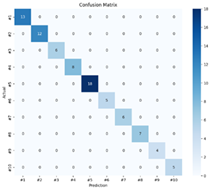
During industry 4.0, digital technology has been integrated with manufacturing processes to improve operational efficiency and hence to enhance organization competitiveness. To this end, computerized methods have been rapidly developed to tackle various production and delivery issues. Production planning and scheduling often demand substantial resources, especially in terms of manpower and time. Consequently, minimizing the time dedicated to both planning and scheduling can hasten product delivery. This paper proposes a novel algorithm that analyzes an unseen process and then predicts a production line by using two-step similarity measures, used in ensemble within the process. Provided with an unseen product model, it identifies the most suitable line, based on the availability of machinery required by the process. In the experiments, eight similarity measures were assessed, based on a realistic production plant. The results revealed that Jaccard similarity and Dice similarity coefficients gave the most accurate predictions. The proposed method is thus believed to be applicable in dynamic production scenarios. Moreover, the developed system also supports incremental production lines.
References
N. Liyanaarachchi, J. Weng, and S. Akasaka, “A Review of Literature on Engineer-To-Order Production systems,” Asian Journal of Management Science and Applications, vol. 8, no. 1, pp. 53-82, 2023, do: 10.1504/AJMSA.2023.134445.
S. Jia, C. Wang, X. Qing, and Z. Ma, “Organization Design of Production Line for an Enterprise,” 8th International Conference on Industrial Engineering and Applications (ICIEA), Chengdu, China, 2021, pp. 252-256, doi: 10.1109/ICIEA52957.2021.9436764.
M. Mallampati, K. Srivinivas, and T. Krishna. M, “Design Process to Reduce Production Cycle Time in Product Development,” IAES International Journal of Artificial Intelligence, vol. 7, no. 3, pp. 125-129, 2018, doi: 10.11591/ijai.v7.i3.pp125-129.
M. R. Prajapati and V. A. Deshpande, “Cycle Time Reduction using Lean Principles and Techniques: A Review,” International Journal of Advance Industrial Engineering, vol. 3, no. 4, pp. 208-213, 2015.
N. B. Kacar, L. Mönch, and R. Uzsoy, “Problem Reduction Approaches for Production Planning using Clearing Functions,” 14th International Conference on Automation Science and Engineering (CASE), Munich, Germany, 2018, pp. 931-938, doi: 10.1109/COASE.2018.8560429.
N. C. Nwasuka and U. Nwaiwu, “Computer-based Production Planning, Scheduling and Control: A Review,” Journal of Engineering Research, vol. 12, no. 1, pp. 275-280, 2024, doi: 10.1016/j.jer.2023.09.027.
V. Modrak, R. Sudhakarapandian, A. Balamurugan, and Z. Soltysova, “A Review on Reinforcement Learning in Production Scheduling: An Inferential Perspective,” Algorithms, vol. 17, no. 8, pp. 343-343, 2024, doi: 10.3390/a17080343.
R. Bandinelli and V. Fani, “Combined use of AI Techniques and Simulation to Support Production Scheduling: evidence from Empirical Research,” 38th ECMS International Conference on Modelling and Simulation; 2024. pp. 34-40, doi: 10.7148/2024-0034.
L. Wang, H. Liu, M. Xia, Y. Wang, and M. Li, “Research on a Multilevel Scheduling Model for Multi Variety and Variable batch Production Environments based on Machine Learning,” Frontiers in Energy Research, vol. 11, 2023, doi: 10.3389/fenrg.2023.1251335.
N. C. Nwasuka and U. Nwaiwu, “Computer-based Production Planning, Scheduling and Control: A Review,” Journal of Engineering Research, vol. 12, no. 1, pp. 275-280, 2024, doi: 10.1016/j.jer.2023.09.027.
L. Wang, H. Liu, M. Xia, Y. Wang, and M. Li, “A Machine Learning based EMA-DCPM Algorithm for Production Scheduling,” Scientific Reports, vol. 14, no. 20810, 2024, doi: 10.1038/s41598-024-71355-w.
X. Ding and B. Zheng, “Research on Intelligent Planning Algorithms based on Machine Learning Optimization,” International Conference on Computers, Information Processing and Advanced Education (CIPAE), 2023, pp. 94-99, doi: 10.1109/CIPAE60493.2023.00024.
Z. Luo, C. Jiang, L. Liu, X. Zheng, H. Ma, and F. Dong, “Deep Reinforcement Learning based Production Scheduling in Industrial Internet of Things,” IEEE Internet of Things Journal, vol. 10, no. 22, pp. 19725-19739, 2023, doi: 10.1109/JIOT.2023.3283056.
H. Song, I. Gi, J. Ryu, Y. Kwon, and J. Jeong, “Production Planning Forecasting System Based on M5P Algorithms and Master Data in Manufacturing Processes,” Applied Sciences. 2023; vol. 13, no. 13, pp. 7829, doi: 10.3390/app13137829.
C. Yuan, C.-C. Wang, M.-L. Chang, W.-T. Lin, P.-A. Lin, C.-C. Lee, and Z.-L. Tsui, “Using a Flexible IoT Architecture and Sequential AI Model to Recognize and Predict the Production Activities in the Labor-Intensive Manufacturing Site,” Electronics, vol. 10, no. 20, pp. 2540, 2021, doi: 10.3390/electronics10202540.
A. P. Alodjants, A. E. Avdyushina, D. V. Tsarev, I. A. Bessmertny, and A. Y. Khrennikov, “Quantum Approach for Contextual Search, Retrieval, and Ranking of Classical Information,” Entropy, vol. 26, no. 10, pp. 862, 2024, doi: 10.3390/e26100862.
AN. Surya and J. Vimala, “Similarity Measure for Complex Non-Linear Diophantine Fuzzy Hypersoft Set and its Application in Pattern Recognition,” Information Sciences, vol. 690, pp. 121591, 2025, doi: 10.1016/j.ins.2024.121591.
M. Azam, Y. Chen, M. O. Arowolo, H. Liu, M. Popescu, and D. Xu, “A Comprehensive Evaluation of Large Language Models in Mining Gene Relations and Pathway Knowledge,” Quantitative Biology, vol. 12, no. 4, pp. 360-374, 2024, doi: 10.1002/qub2.57.
C. Sun, G. Che, X. Dong, R. Zou, L. Feng, and X. Ding, “Review on Algorithm for Fusion of Oblique Data and Radar Point Cloud,” Lecture Notes in Electrical Engineering. vol. 1033, pp. 527-535, 2024, doi: 10.1007/978-981-99-7502-0_58.
I. Bartkowska, L. Wysocki, A. Zajkowski, and P. Tuz, “Comparative Analysis of Leak Detection Methods using Hydraulic Modelling and Sensitivity Analysis in Rural and Urban–Rural Areas,” Sustainability, vol. 16, no. 17, 2024, doi: 10.3390/su16177405.
S. Shumet, E. Salelew, G. T. Desalegn, Y. Mirkena, D. A. Angaw, T. A. Zeleke, T. Kassew, and M. Wondie, “Socio-Demographic, Psychosocial, and Suicidal Behavior correlates of Stigma Among People with Physical Disabilities in Northwest Ethiopia,” BMC Public Health, vol. 24, 2024, doi: 10.1186/s12889-024-20379-y.
K. Pani and I. Chawla, “Synthetic MRI in Action: A Novel Framework in Data Augmentation Strategies for Robust Multi-Modal Brain Tumor Segmentation,” Computers in Biology and Medicine, vol.183, 2024, doi: 10.1016/j.compbiomed.2024.109273.
H. Arabi and M. Akbari, “Improving Plagiarism Detection in Text Document using Hybrid Weighted Similarity,” Expert Systems with Applications, vol. 207, 2022, doi: 10.1016/j.eswa.2022.118034.
X. Wang and E.V. Konstantinova, “The Sequence Reconstruction Problem for Permutations with the Hamming Distance,” Cryptography and Communications, vol. 16, pp. 1033-1057, 2024, doi: 10.1007/s12095-024-00717-y.
F. Shao, H. Shao, D. Wang, and W.H.K. Lam, “A Multi-task Spatio-Temporal Generative Adversarial Network for Prediction of Travel Time Reliability in Peak Hour Periods,” Physica A: Statistical Mechanics and its Applications, vol. 638, 2024, doi: 10.1016/j.physa.2024.129632.
Downloads
Published
How to Cite
Issue
Section
License

This work is licensed under a Creative Commons Attribution-NonCommercial-NoDerivatives 4.0 International License.