Hybrid ANN-GA and RSM-GA Models for Optimizing GMAW Parameters to Enhance Impact Strength of Dissimilar Aluminum Alloys
Keywords:
welding optimization, ANN-GA, RSM-GA, dissimilar alloys, GMAW, impact strengthAbstract
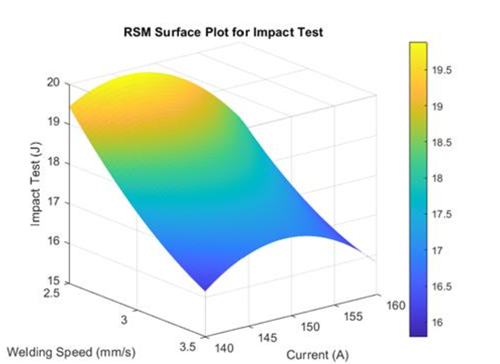
Optimizing welding parameters is essential for achieving superior mechanical performance, particularly in joining dissimilar aluminum alloys such as AA6061 and AA7075 using Gas Metal Arc Welding (GMAW). Unlike previous studies that primarily rely on single-model frameworks or conventional optimization techniques, this research uniquely integrates both ANN-GA and RSM-GA models to comprehensively evaluate and compare their performance on dissimilar aluminum alloy welds (AA6061–AA7075), offering a dual-model perspective rarely explored in the literature. This study employs a comprehensive approach integrating Artificial Neural Networks (ANN) and Genetic Algorithms (GA) to optimize parameters for enhanced impact strength. The Response Surface Methodology (RSM) with GA is also applied to analyze parameter interactions. Materials, including AA6061, AA7075, and ER5356 filler wire, were selected for their chemical compositions, balancing strength, corrosion resistance, and weldability. Using robotic GMAW ensured precision and repeatability, while Charpy impact testing evaluated joint toughness. The ANN-GA model identified optimal parameters—welding current of 143.08 A, speed of 2.61 mm/s, and wire feed rate of 3.86 m/min—achieving an impact energy of 20.00 J. Similarly, the RSM-GA framework yielded comparable results with parameters of 148.55 A, 2.52 mm/s, and 3.68 m/min. The comparative analysis highlighted the ANN-GA model's superior predictive accuracy (RMSE = 0.79815, MAPE = 3.7979), while RSM-GA provided insights into parameter trends. The outcomes provide a robust foundation for improving weld performance and optimizing parameters in industrial applications, demonstrating the practical value and adaptability of AI-driven welding models. The findings advocate integrating ANN and RSM models to enhance parameter optimization, offering practical applications in aerospace, automotive, and structural engineering industries.
References
M. Makeshkumar, S. Surender, S. Arunprakash, R. Madesh, M. S. Kumar, and K. Sudharsan, “Microstructural and mechanical properties evaluation of dissimilar aluminum alloy and bronze joints using friction stir welding,” Mater. Today Proc., vol. 47, pp. 5239–5244, 2021. doi:10.1016/j.matpr.2021.05.563.
M. Deshpande, J. Kshirsagar, and D. Dharmadhikari, “Optimization of GMAW process parameters to improve the length of penetration in EN 10025 S 235 grade,” J. Weld. Join., vol. 35, no. 1, pp. 74–78, 2017. doi: 10.5781/jwj.2017.35.1.74.
H. Ma, G. Qin, P. Geng, Z. Ao, and Y. Chen, “Effect of intermetallic compounds on the mechanical property and corrosion behaviour of aluminum alloy/steel hybrid fusion-brazed welded structure,” J. Manuf. Process., vol. 75, pp. 170–180, 2022. doi: 10.1016/j.jmapro.2022.01.004.
B. Mvola, P. Kah, and J. Martikainen, “Welding of dissimilar non-ferrous metals by GMAW processes,” Int. J. Mech. Mater. Eng., vol. 9, no. 1, 2014. doi: 10.1186/s40712-014-0021-8.
J. Wang, X. Chen, L. Yang, and G. Zhang, “A strength estimation method for aluminum alloy butt welded joints with mismatched mechanical properties,” Thin-Walled Struct., vol. 179, p. 109585, 2022. doi: 10.1016/j.tws.2022.109585.
I. Kim and M. Park, “A review on optimizations of welding parameters in GMA welding process,” J. Weld. Join., vol. 36, no. 1, pp. 65–75, 2018. doi: 10.5781/jwj.2018.36.1.8.
M. Ramarao, M. F. L. King, A. Sivakumar, V. Manikandan, M. Vijayakumar, and R. Subbiah, “Optimizing GMAW parameters to achieve high impact strength of the dissimilar weld joints using Taguchi approach,” Mater. Today Proc., vol. 50, pp. 861–866, 2021. doi: 10.1016/j.matpr.2021.06.137.
S. K. Dewangan, M. Tripathi, and M. Manoj, “Effect of welding speeds on microstructure and mechanical properties of dissimilar friction stir welding of AA7075 and AA5083 alloy,” Mater. Today Proc., vol. 27, pp. 2713–2717, 2020. doi: 10.1016/j.matpr.2019.12.190.
L. Jacques and A. E. Ouafi, “ANN-based predictive modelling of weld shape and dimensions in laser welding of galvanized steel in butt joint configurations,” J. Miner. Mater. Charact. Eng., vol. 6, no. 3, pp. 316–332, 2018. doi: 10.4236/jmmce.2018.63022.
P. Anbarasu, R. Yokeswaran, A. G. Antony, and S. Sivachandran, “Investigation of filler material influence on hardness of TIG welded joints,” Mater. Today Proc., vol. 21, pp. 964–967, 2019. doi: 10.1016/j.matpr.2019.09.061.
I. Guzmán, E. Granda, J. Acevedo, A. Martínez, Y. Dávila, and R. Velázquez, “Comparative in mechanical behavior of 6061 aluminum alloy welded by pulsed GMAW with different filler metals and heat treatments,” Materials, vol. 12, no. 24, p. 4157, 2019. doi: 10.3390/ma12244157.
K. A. Kulkarni, “Prediction of welding residual stresses using artificial neural network (ANN),” Mater. Today Proc., vol. 46, pp. 1366–1370, 2021. doi: 10.1016/j.matpr.2021.02.486.
B. Belahcene, “Application and optimization of an artificial neural network to forecast thermo-mechanical behaviour of HLE steel under weld spot effect,” Heliyon, vol. 9, no. 6, p. e16739, 2023. doi:10.1016/j.heliyon.2023.e16739.
S. Suhin, S. R. Divahar, J. E. R. Dhas, K. A. S. Lewise, and M. S. Gupta, “Optimizing FSW process parameters using RSM and regression analysis for similar and dissimilar aluminium materials,” Mater. Today Proc., vol. 64, pp. 368–373, 2022. doi: 10.1016/j.matpr.2022.04.707.
T. L. Frango, M. Prabhakaran, C. Sivakandhan, K. V. Babu, and J. Vairamuthu, “Enhancement of welding strength on Eglin steel using MIG welding process,” Mater. Today Proc., vol. 33, pp. 4617–4620, 2020. doi: 10.1016/j.matpr.2020.08.198.
J. Kershaw, R. Yu, Y. Zhang, and P. Wang, “Hybrid machine learning-enabled adaptive welding speed control,” J. Manuf. Process., vol. 71, pp. 374–383, 2021. doi: 10.1016/j.jmapro.2021.09.023.
R. P. Verma, K. Pandey, and G. Mittal, “Genetic-neural optimization approach for gas metal arc welding of dissimilar aluminium alloys of AA5083-O/AA6061-T6,” Int. J. Lightweight Mater. Manuf., vol. 7, no. 1, pp. 214–220, 2023. doi: https://doi.org/10.1016/j.ijlmm.2023.07.001.
Z. Wan et al., “Prediction and optimization of tensile properties of 2219-T8 aluminum alloy TIG welding joint by machine learning,” Mater. Des., vol. 245, p. 113274, 2024. doi: 10.1016/j.matdes.2024.113274.
A. Ahmad and S. Alam, “Parametric optimization of TIG welding using Response Surface Methodology,” Mater. Today Proc., vol. 18, pp. 3071–3079, 2019. doi: 10.1016/j.matpr.2019.07.179.
D. S. Correia, C. V. Gonçalves, S. S. Da Cunha, and V. A. Ferraresi, “Comparison between genetic algorithms and response surface methodology in GMAW welding optimization,” J. Mater. Process. Technol., vol. 160, no. 1, pp. 70–76, 2005. doi: 10.1016/j.jmatprotec.2004.04.243.
Y. Yang, Z. Luo, Y. Zhang, and J. Su, “Dissimilar welding of aluminium to steel: A review,” J. Manuf. Process., vol. 110, pp. 376–397, 2024. doi: 10.1016/j.jmapro.2023.12.060.
P. B. Kanakavalli, B. N. Babu, and C. V. Sai, “A hybrid methodology for optimizing MIG welding process parameters in joining of dissimilar metals,” Mater. Today Proc., vol. 23, pp. 507–512, 2019. doi: 10.1016/j.matpr.2019.05.396.
V. Prajapati, N. Dinbandhu, J. J. Vora, S. Das, and K. Abhishek, “Study of parametric influence and welding performance optimization during regulated metal deposition (RMD™) using grey integrated with fuzzy Taguchi approach,” J. Manuf. Process., vol. 54, pp. 286–300, 2020. doi: 10.1016/j.jmapro.2020.03.017.
E. A. Gyasi, H. Handroos, and P. Kah, “Survey on artificial intelligence (AI) applied in welding: A future scenario of the influence of AI on technological, economic, educational and social changes,” Procedia Manuf., vol. 38, pp. 702–714, 2019. doi: 10.1016/j.promfg.2020.01.095.
H. Van Huong, T. T. Nguyen, V. Nguyen, and V. T. T. Nguyen, “Material strength optimization of dissimilar MIG welding between carbon and stainless steels,” Metals, vol. 14, no. 9, p. 1011, 2024. doi: 10.3390/met14091011.
R. M. R., A. Jagan, L. Pavithran, A. Shrivastava, and S. K. Selvaraj, “Intelligent welding by using machine learning techniques,” Mater. Today Proc., vol. 46, pp. 7402–7410, 2021. doi: 10.1016/j.matpr.2020.12.1149.
P. Budsarakham, C. Riyaphan, R. Canyook, and K. Taweesup, “Effects of Cr on anodising and microstructure of cast aluminium alloys,” Mater. Today Proc., vol. 5, no. 3, pp. 9417–9423, 2018. doi: 10.1016/j.matpr.2017.10.119.
Y. Phaneendra et al., “Enhancement of tribological properties of AA7075 aluminum alloy using nano-silicon carbide reinforcement: A detailed wear analysis and microhardness study,” Mater. Today Proc., vol. 115, pp. 229–237, 2023. doi: 10.1016/j.matpr.2023.08.135.
S. Skrobacz, T. Łagoda, P. Krysiński, and S. Małys, “Automation in welding process of aluminium alloys intended for production of door frames,” Procedia Struct. Integr., vol. 66, pp. 11–25, 2024. doi: 10.1016/j.prostr.2024.11.051.
R. T. Martínez, G. A. Bestard, A. M. A. Silva, and S. C. A. Alfaro, “Analysis of GMAW process with deep learning and machine learning techniques,” J. Manuf. Process., vol. 62, pp. 695–703, 2021. doi: 10.1016/j.jmapro.2020.12.052.
[B. V. Sankar, I. D. Lawrence, and S. Jayabal, “Experimental study and analysis of weld parameters by GRA on MIG welding,” Mater. Today Proc., vol. 5, no. 6, pp. 14309–14316, 2018. doi: 10.1016/j.matpr.2018.03.013.
M. Chaturvedi and S. A. Vendan, “Parametric study and optimization for welding processes using machine learning,” Ann. Dunarea De Jos Univ. Galati Fascicle XII Weld. Equip. Technol., vol. 32, pp. 14–22, 2021. doi: 10.35219/awet.2021.02.
D. B. K. T., S. P., and R. T., “Experimental investigation and characterization of laser welded NiTinol shape memory alloys,” J. Manuf. Process., vol. 25, pp. 253–261, 2017. doi: 10.1016/j.jmapro.2016.12.006.
A. Islam, S. Sharma, K. Sharma, R. Sharma, A. Sharma, and D. Roy, “Real-time data monitoring through sensors in robotized shielded metal arc welding,” Mater. Today Proc., vol. 26, pp. 2368–2373, 2020. doi: 10.1016/j.matpr.2020.02.508.
J. E. R. Dhas and S. J. H. Dhas, “A review on optimization of welding process,” Procedia Eng., vol. 38, pp. 544–554, 2012. doi: 10.1016/j.proeng.2012.06.068.
S. P. Murzin, “Artificial intelligence-driven innovations in laser processing of metallic materials,” Metals, vol. 14, no. 12, p. 1458, 2024. doi: 10.3390/met14121458.
R. J. Thomas and A. D. Sorensen, “Charpy impact test methods for cementitious composites: Review and commentary,” J. Test. Eval., vol. 46, no. 6, pp. 2422–2430, 2018. doi: 10.1520/jte20170057.
S. Bocchi, M. Cabrini, G. D’Urso, C. Giardini, S. Lorenzi, and T. Pastore, “The influence of process parameters on mechanical properties and corrosion behavior of friction stir welded aluminum joints,” J. Manuf. Process., vol. 35, pp. 1–15, 2018. doi: 10.1016/j.jmapro.2018.07.012.
M. J. Rawa, M. H. R. Dehkordi, M. J. Kholoud, N. H. Abu-Hamdeh, and H. Azimy, “Using the numerical simulation and artificial neural network (ANN) to evaluate temperature distribution in pulsed laser welding of different alloys,” Eng. Appl. Artif. Intell., vol. 126, p. 107025, 2023. doi: 10.1016/j.engappai.2023.107025.
M. Habeeb et al., “Artificial neural networks for the prediction of mechanical properties of CGNP/PLGA nanocomposites,” Mater. Today Proc., 2023. doi: 10.1016/j.matpr.2023.08.354.
R. Farias, P. Teixeira, and L. Vilarinho, “An efficient computational approach for heat source optimization in numerical simulations of arc welding processes,” J. Constr. Steel Res., vol. 176, p. 106382, 2020. doi: 10.1016/j.jcsr.2020.106382.
K. Nam and H. Ki, “Deep learning-based monitoring system for predicting top and bottom bead widths during the laser welding of aluminum alloy,” J. Manuf. Process., vol. 120, pp. 616–627, 2024. doi: 10.1016/j.jmapro.2024.04.048.
J. G. Tavera-Sainz, H. Minor-Popocatl, O. Aguilar-Mejía, and A. F. Miranda-Perez, “Application of RSM DoE to optimize the weld penetration depth in automotive seat adjusters,” MRS Adv., 2025. doi: 10.1557/s43580-025-01122-0.
S. M. Asaad, A. Inayat, C. Ghenai, and A. Shanableh, “Response surface methodology in biodiesel production and engine performance assessment,” Int. J. Thermofluids, vol. 21, p. 100551, 2023. doi: 10.1016/j.ijft.2023.100551.
I. Veza, M. Spraggon, I. R. Fattah, and M. Idris, “Response surface methodology (RSM) for optimizing engine performance and emissions fueled with biofuel: Review of RSM for sustainability energy transition,” Results Eng., vol. 18, p. 101213, 2023. doi: 10.1016/j.rineng.2023.101213.
R. P. Verma and K. Pandey, “Multi-response optimization of process parameters of GMA welding of dissimilar AA 6061-T6 and AA 5083-O aluminium alloy for optimal mechanical properties,” Mater. Today Proc., vol. 46, pp. 10204–10210, 2021. doi: 10.1016/j.matpr.2020.11.375.
S. Srivastava and R. Garg, “Process parameter optimization of gas metal arc welding on IS:2062 mild steel using response surface methodology,” J. Manuf. Process., vol. 25, pp. 296–305, 2017. doi: 10.1016/j.jmapro.2016.12.016.
R. V. Rao and A. Araya, “Multi-objective optimization of welding processes using modified RAO algorithms,” J. Adv. Manuf. Syst., vol. 23, no. 2, pp. 479–508, 2023. doi: 10.1142/s0219686724500203.
A. P. P. K. Baghel and T. Gupta, “Optimization of parameters of pulse current gas tungsten arc welding using non-conventional techniques,” J. Adv. Join. Process., vol. 6, p. 100124, 2022. doi: 10.1016/j.jajp.2022.100124.
J. Shim and I. Kim, “Evolutionary algorithm to optimize process parameters of AL/Steel magnetic pulse welding,” Appl. Sci., vol. 13, no. 23, p. 12881, 2023. doi: 10.3390/app132312881.
S. M. Asaad, A. Inayat, C. Ghenai, and A. Shanableh, “Response surface methodology in biodiesel production and engine performance assessment,” Int. J. Thermofluids, vol. 21, p. 100551, 2023. doi: 10.1016/j.ijft.2023.100551.
J. T. Kahnamouei and M. Moallem, “Advancements in control systems and integration of artificial intelligence in welding robots: A review,” Ocean Eng., vol. 312, p. 119294, 2024. doi: 10.1016/j.oceaneng.2024.119294.
Y. Pookamnerd, T. Phatungthane, and C. Summatta, “Optimized GMAW parameters for enhancing mechanical properties of dissimilar AA6061 and AA7075 alloy welds using hybrid ANN-GA approach,” EUREKA: Physics and Engineering, no. 2, pp. 166–180, Mar. 2025, doi: 10.21303/2461-4262.2025.003504.
Downloads
Published
How to Cite
Issue
Section
License

This work is licensed under a Creative Commons Attribution-NonCommercial-NoDerivatives 4.0 International License.