Assessing Aquatic Plant Diversity and Management Potential in Wetlands in Northwestern and Southwestern Bangladesh 10.32526/ennrj/23/20240287
Article Sidebar
Main Article Content
Abstract
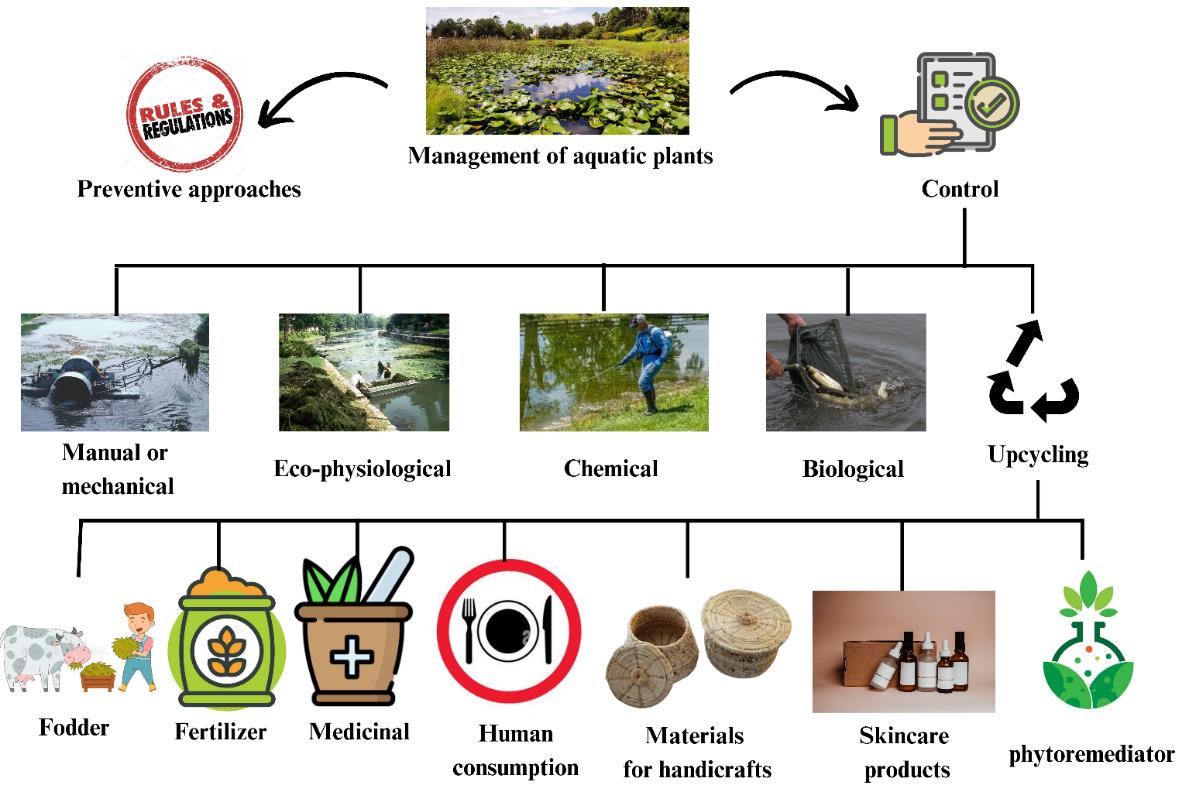
Aquatic plants are essential organisms for assessing ecological health and for managing and conserving aquatic biodiversity. The present study investigated the diversity of aquatic flora, in addition to their applications and management, in northwestern (Gajner Beel) and southwestern (Padma Beel) Bangladesh. This research utilized a mixed-methods approach, incorporating observation of the study area for collecting samples, qualitative interviews, and quantitative surveys. A total of 38 aquatic plant species of 4 types belonging to 16 orders and 23 families were recorded from the two wetlands. Asterales was the predominant order in both wetlands, with Araceae and Asteraceae being the largest families. Almost half (44%) of the aquatic plants in both ecosystems bloomed during the rainy season. In Gajner Beel and Padma Beel, 41% and 48% of aquatic plants, respectively, rarely occurred, while 31% and 41% of aquatic weeds were frequent, respectively. Approximately a quarter of the plants have an unevaluated IUCN conservation status, with about 13% of plants in Gajner Beel and 15% in Padma Beel being exotic. Farmers only employ manual or mechanical techniques to control common aquatic weeds, without any preventive measures. About 74% of the aquatic plants in both regions are used for various purposes by local people, including traditional medicine, human food, animal feed, raw materials for handicrafts, and fertilizers. The study examined management approaches for the aquatic flora in both regions, emphasizing their potential utilization.
Article Details

This work is licensed under a Creative Commons Attribution-NonCommercial 4.0 International License.
Published articles are under the copyright of the Environment and Natural Resources Journal effective when the article is accepted for publication thus granting Environment and Natural Resources Journal all rights for the work so that both parties may be protected from the consequences of unauthorized use. Partially or totally publication of an article elsewhere is possible only after the consent from the editors.
References
Acevedo-Rodríguez P, Strong MT. Catalogue of Seed Plants of the West Indies. Washington, D.C.: Smithsonian Institution; 2012.
Acharya J, Banerjee D, Mukherjee A. A contribution to the study of Commelinaceae R.Br. in Darjeeling - Sikkim Himalayas. Pleione 2009;3(1):18-27.
Ahmed ZF, Ameer QAA, Abbas RF. Release cumulative power between (Ceratophyllum demersum L) and) Hydrilla verticillata (plant to Phytoremediation lead in the polluted water aquatic ecosystem. Journal of the College of Basic Education 2018;24(101):79-91.
Ahmed ZU, Hassan MA, Begum ZNT, Khondker M, Kabir SMH, Ahmad M, et al. Encyclopedia of Flora and Fauna of Bangladesh, Volume 6: Angiosperms: Dicotyledons Acanthaceae-Asteraceae. Dhaka: Asiatic Society of Bangladesh; 2008. p. 1-408.
Ali R, Billah M, Hassan M, Dewan SMR. Enhydra fluctuans Lour: A review. Research Journal of Pharmacy and Technology 2013;6(9):927-9.
Aloo P, Ojwang W, Omondi R, Njiru JM, Oyugi D. A review of the impacts of invasive aquatic weeds on the biodiversity of some tropical water bodies with special reference to Lake Victoria (Kenya). Biodiversity Journal 2013;4(4):471-82.
Ame MA, Khatun L, Khatun S, Sumona SA, Rahman AM. Investigation of aquatic vascular flora at Sadullapur Upazila of Gaibandha District, Bangladesh. GSC Biological and Pharmaceutical Sciences 2022;21(1):175-87.
Angadi KK, Kandru A, Rahaman A. Antihyperglycaemic, antihyperlipidaemic and antioxidant assays (in vivo) of Nymphaea pubescens leaf extract. International Journal of Pharma and Bio Science 2013;4(2):624-30.
Ansari AA, Naeem M, Gill SS, AlZuaibr FM. Phytoremediation of contaminated waters: An eco-friendly technology based on aquatic macrophytes application. The Egyptian Journal of Aquatic Research 2020;46(4):371-6.
Ashrafuzzaman M, Jone MJH, Ashraf SB. Aquatic plants of Bangladesh agricultural University botanical Garden: Species diversity and potential uses. Indian Journal of Ecology 2023;50(3):555-65.
Babu AS, Krishna CR, Kumari NN. Estimation of fodder quality and digestibility parameters of Pistia stratiotes plant meal. Journal of Krishi Vigyan 2022;10(2):137-40.
Banglapedia. The Asiatic Society of Bangladesh [Internet]. 2012 [cited 2024 Sep 14]. Available from: https://en.banglapedia.org/index.php/Beel.
Bao Q, Liu Z, Zhao M, Hu Y, Li D, Han C, et al. Role of carbon and nutrient exports from different land uses in the aquatic carbon sequestration and eutrophication process. Science of the Total Environment 2022;813:Article No. 151917.
Basar MH, Rahman AHMM. Aquatic vascular flora at Sadar Upazila of Chapai Nawabganj District, Bangladesh. Discovery 2023;59:e17d1019.
Bangladesh Meteorological Department (BMD). Temperature data [Internet]. 2012 [cited 2024 Sep 14]. Available from: https://live6.bmd.gov.bd/p/Temperature-Data.
Briones MF, Jazmin PF, Pajarillaga BE, Juvinal JG, Leon AA, Rustia JM, et al. Biodegradable film from wild taro Colocasia esculenta (L.) Schott starch. Agricultural Engineering International: CIGR Journal 2020;22(1):152-5.
Campos-Silva JV, Peres CA. Community-based management induces rapid recovery of a high-value tropical freshwater fishery. Scientific Reports 2016;6(1):Article No. 34745.
Chambers PA, Lacoul P, Murphy KJ, Thomaz SM. Global diversity of aquatic macrophytes in freshwater. Hydrobiologia 2008;595(1):9-26.
Chen M, Zhang X, Jiang P, Liu J, You S, Lv Y. Advances in heavy metals detoxification, tolerance, accumulation mechanisms, and properties enhancement of Leersia hexandra Swartz. Journal of Plant Interactions 2022;17(1):766-78.
Cherwoo L, Berwal B, Kumar S, Datta A, Prabhu GN, Oo HN, et al. Water hyacinth biomass valorization: fostering biodiversity and sustainable development in the bioeconomy. In: Biodiversity and Bioeconomy: Status Quo, Challenges, and Opportunities. Elsevier Inc; 2024. p. 445-74.
Chowdhury AH, Ahmed R. Water, sediment and macrophyte quality of some shrimp culture ponds and freshwater ecosystems of Koyra. Bangladesh Journal of Botany 2012;41(1):35-41.
Conard HS. The Waterlilies: A Monograph of the Genus Nymphaea. Washington, DC: Carnegie Institution of Washington; 1905. p. 243-63.
Dudgeon D, Arthington AH, Gessner MO, Kawabata ZI, Knowler DJ, Lévêque C, et al. Freshwater biodiversity: Importance, threats, status and conservation challenges. Biological Reviews 2006;81(2):163-82.
Engelhardt KA, Ritchie ME. Effects of macrophyte species richness on wetland ecosystem functioning and services. Nature 2001;411(6838):687-9.
Ezzariai A, Hafidi M, Ben Bakrim W, Kibret M, Karouach F, Sobeh M, et al. Identifying advanced biotechnologies to generate biofertilizers and biofuels from the world’s worst aquatic weed. Frontiers in Bioengineering and Biotechnology 2021;9:Article No. 769366.
Fasakin EA, Balogun AM, Fasuru BE. Use of duckweed, Spirodela polyrrhiza L. Schleiden, as a protein feedstuff in practical diets for tilapia, Oreochromis niloticus L. Aquaculture Research 1999; 30(5):313¬-8.
Feng L, Zhai YY, Xu J, Yao WF, Cao YD, Cheng FF, et al. A review on traditional uses, phytochemistry and pharmacology of Eclipta prostrata (L.) L. Journal of Ethnopharmacology 2019;245:Article No.112109.
Food and Agricultural Organization of the United Nations (FAO). The State of the World’s Biodiversity for Food and Agriculture. Rome, Italy: FAO Commission on Genetic Resources for Food and Agriculture Assessments; 2019.
Gettys LA, Haller WT, Petty DG. Biology and Control of Aquatic Plants: A Best Management Practices Handbook. 4th ed. Marietta, GA, USA: Aquatic Ecosystem Restoration Foundation; 2014. p. 214.
Giri A. Various types of aquatic weeds in a village fish pond and their control. International Journal of Environmental Sciences and Natural Resources 2020;25(3):142-6.
Groom QJ, Van der Straeten J, Hoste I. The origin of Oxalis corniculata L. Peer J 2019;7:e6384.
Gross EM. Allelopathy of aquatic autotrophs. Critical Reviews in Plant Sciences 2003;22(3-4):313-39.
Gupta C, Prakash D. Phytonutrients as therapeutic agents. Journal of Complementary and Integrative Medicine 2014;11(3):151-69.
Han F, Zhang Y, Liu Z, Wang C, Luo J, Liu B, et al. Effects of maifanite on growth, physiological and phytochemical process of submerged macrophytes Vallisneria spiralis. Ecotoxicology and Environmental Safety 2020;189:Article No. 109941.
Hasan MM, Islam MT, Laskar MA, Sultana T. Distribution and diversity of aquatic macrophytes and the assessment of physico-chemical parameters of Dakatia Beel in Khulna district, Bangladesh. Asian Journal of Medical and Biological Research 2021;7(2):118-25.
Hoque M, Rafi IK, Hossain MS. Centella asiatica: A mini review of its medicinal properties and different uses. World Journal of Advanced Research and Reviews 2023;19(2):1185-91.
Hossain MF, Chowdhury G, Nabil TA, Hossain A, Bhuyain S, Mithi MMF, et al. Diversity, abundance, and seasonal variation of aquatic macrophytes in Southeastern Bangladesh. Asian Journal of Fisheries and Aquatic Research 2024;26:55-66.
Huang Q, Zhang S, Huang R, Wei L, Chen Y, Lv S, et al. Isolation and identification of an anti-hepatitis B virus compound from Hydrocotyle sibthorpioides Lam. Journal of Ethno-Pharmacology 2013;150(2):568-75.
Inderjit, Duke SO. Ecophysiological aspects of allelopathy. Planta 2003;217:529-39.
Ishrat N, Gupta A, Khan MF, Shahab U, Khan MS, Ahmad N, et al. Phytoconstituents of Nymphaea rubra flowers and their anti-diabetic metabolic targets. Fitoterapia 2024;176:Article No. 106014.
Integrated Taxonomic Information System (ITIS). Integrated Taxonomic Information system [Internet]. 2011 [cited 2024 Sep 14]. Available from: https://www.itis.gov/.
International Union for Conservation of Nature (IUCN). The IUCN Red List of Threatened Species [Internet]. 2024 [cited 2024 Sep 14]. Available from: https://www.iucnredlist.org.
Jaccard P. The distribution of the flora in the alpine zone. New Phytologist 1912;11(2):37-50.
Jain MS, Kalamdhad AS. A review on management of Hydrilla verticillata and its utilization as potential nitrogen-rich biomass for compost or biogas production. Bioresource Technology Reports 2018;1:69-78.
Jane J, Shen L, Chen J, Lim S, Kasemsuwan T, Nip W. Physical and chemical studies of taro starches and flours. Cereal Chemistry 1992;69(5):528-35.
Jangwattana R, IWAI CB. Using Azolla pinnata for wastewater treatment from poultry farm. International Journal of Engineering Research and Development 2010;1(2):Article No. 23.
Journey WK, Skillicorn P, Spira W. Duckweed Aquaculture: A New Aquatic Farming System for Developing Countries. Washington DC: The World Bank; 1993.
Kamma M, Lin WC, Lau SC, Chansakaow S, Leelapornpisid P. Anti-aging cosmeceutical product containing of Nymphaea rubra Roxb. ex Andrews Extract. Chiang Mai Journal of Science 2019;46:1143-60.
Kaur P, Kaur L, Kaur N, Singh A, Kaur J, Kaur H, et al. A brief review on pharmaceutical uses of Nelumbo nucifera. Journal of Pharmacognosy and Phytochemistry 2019;8(3):3966-72.
Kevin MK, Lancar ML. Aquatic Weeds and Their Management. India: International Commission on Irrigation and Drainage; 2002. p. 15-64.
Khan MHI, Ahsan SMM, Fatema MK, Iqbal SMS, Molla MHR, Gabr MH, et al. Institutionalizing the community-based management approach for natural wetlands toward the exploring policy gaps. Egyptian Journal of Aquatic Biology and Fisheries 2022;26(6):439-65.
King SL, Laubhan MK, Tashjian P, Vradenburg J, Fredrickson L. Wetland conservation: Challenges related to water law and farm policy. Wetlands 2021;41(5):Article No. 54.
Lacoul P, Freedman B. Environmental influences on aquatic plants in freshwater ecosystems. Environmental Reviews 2006; 14(2):89-136.
Lee HJ, Kim MH, Choi YY, Kim EH, Hong J, Kim K, et al. Improvement of atopic dermatitis with topical application of Spirodela polyrhiza. Journal of Ethnopharmacology 2016; 180:12-7.
Madsen JD, Wersal RM. A review of aquatic plant monitoring and assessment methods. Journal of Aquatic Plant Management 2017;55(1):1-2.
Maltby E. The Changing wetland paradigm. In: Maltby E, Barker T, editors. The Wetlands Handbook. John Wiley and Sons, Inc.; 2009.
Mathur GN, Sharma R, Choudhary PC. Use of Azolla (Azolla pinnata) as cattle feed supplement. Journal of Krishi Vigyan 2013;2(1):73-5.
McKinley DC, Miller-Rushing AJ, Ballard HL, Bonney R, Brown H, Cook-Patton SC, et al. Citizen science can improve conservation science, natural resource management, and environmental protection. Biological Conservation 2017;208:15-28.
Meyerson LA, Pauchard A, Brundu G, Carlton JT, Hierro JL, Kueffer C, et al. Moving toward global strategies for managing invasive alien species. In: Global Plant Invasions. Cham: Springer International Publishing; 2022. p. 331-60.
Muddathir AK, Balansard G, Timon-David P, Babadjamian A, Yagoub AK, Julien MJ. Anthelmintic properties of Polygonum glabrum. Journal of Pharmacy and Pharmacology 1987; 39(4):296-300.
Mustafa HM, Hayder G. Recent studies on applications of aquatic weed plants in phytoremediation of wastewater: A review article. Ain Shams Engineering Journal 2021;12(1):355-65.
Nahar L, Nath S, Sarker SD. “Malancha” [Alternanthera philoxeroides (Mart.) Griseb.]: A potential therapeutic option against viral diseases. Biomolecules 2022;12(4): Article No. 582.
Newaz MW, Rahman S. Wetland resource governance in Bangladesh: An analysis of community-based co-management approach. Environmental Development 2019;32:Article No. 100446.
Pasha MK, Uddin SB. Dictionary of Plant Names of Bangladesh (Vascular Plants). Chittagong, Dhaka, Bangladesh: Janokalyan Prokashani; 2013. p. 1-434.
Paul P. Aquatic plant diversity of ponds in Thrissur District, Kerala, India. Indian Journal of Ecology 2022;49(1):174-7.
Peerzada AM, Ali HH, Naeem M, Latif M, Bukhari AH, Tanveer A. Cyperus rotundus L.: Traditional uses, phytochemistry, and pharmacological activities. Journal of Ethnopharmacology 2015;174:540-60.
Phulera S, Gurung N, Arora KM, Kumar G, Karthik L, Rao KV. Evaluation of phytochemical composition, antioxidant and cytotoxic activity of Ipomoea fistulosa leaves (Convolvulaceae). Research Journal of Pharmacy and Technology 2014;7(4):454-9.
Prajapati R, Kalariya M, Umbarkar R, Parmar S, Sheth N. Colocasia esculenta: A potent indigenous plant. International Journal of Nutrition, Pharmacology, Neurological Diseases 2011;1(2):90-6.
Prasad KN, Shivamurthy GR, Aradhya SM. Ipomoea aquatica, an underutilized green leafy vegetable: A review. International Journal of Botany 2008;4(1):123-9.
Qadri H, Uqab B, Javeed O, Dar GH, Bhat RA. Ceratophyllum demersum: An accretion biotool for heavy metal remediation. Science of the Total Environment 2022;806:Article No.150548.
Rahaman MA, Rahman MM, Hossain MS. Climate-resilient agricultural practices in different agro-ecological zones of Bangladesh. In: Filho WL, editor. Handbook of Climate Change Resilience. Cham: Springer; 2019. p. 1-27.
Rahman MA, Hasegawa H, Ueda K, Maki T, Okumura C, Rahman MM. Arsenic accumulation in duckweed (Spirodela polyrhiza L.): A good option for phytoremediation. Chemosphere 2007;69(3):493-9.
Rahman MA, Sultana MA, Islam MA, Hossain MY. Stock assessment of barred spiny eel, Macrognathus pancalus (Hamilton, 1822) in a wetland ecosystem, northwestern Bangladesh: A fundamental approach to ensure sustainability and conservation. Heliyon 2024;10(5):e26492.
Rai PK. Heavy metals and arsenic phytoremediation potential of invasive alien wetland plants Phragmites karka and Arundo donax: Water-Energy-Food (WEF) Nexus linked sustainability implications. Bioresource Technology Reports 2021;15:Article No. 100741.
Ramsar Convention. The Ramsar Convention on Wetlands. Iran: Ramsar; 1971.
Rashid MA, Naz S, Zaman M, Hasan M, Sarkar MAQ. Hydrobiological studies of the Chalan Beel Wetland in Bangladesh. Plant Environment Development 2014;3(1):35-41.
Ravi R, Rajendran D, Oh WD, Mat Rasat MS, Hamzah Z, Ishak IH, et al. The potential use of Azolla pinnata as an alternative bio-insecticide. Scientific Reports 2020;10(1):Article No. 19245.
Ravindran V, Sivakanesan R, Cyril HW. Nutritive value of raw and processed colocasia (Colocasia esculenta) corn meal for poultry. Animal Feed Science and Technology 1996; 57(4):335-45.
Ripa FA, Nahar L, Haque M, Islam MM. Antibacterial, cytotoxic and antioxidant activity of crude extract of Marsilea quadrifolia. European Journal of Scientific Research 2009;33(1):123-9.
Roy DC, Barman SK, Shaik MM. Current updates on Centella asiatica: Phytochemistry, pharmacology and traditional uses. Medicinal Plant Research 2013;3(4):20-36.
Sahare AY, Chavhan BK, Dhoke PS, Agrawal TR. Phytochemical investigation and evaluation of antioxidant, and anti-inflamatory activity of aerial parts of Lindernia antipoda. Rasayan Journal of Chemistry 2023;16(1):284-9.
Schuyt KD. Economic consequences of wetland degradation for local populations in Africa. Ecological Economics 2005;53(2):177-90.
Sierra-Carmona CG, Hernández-Orduña MG, Murrieta-Galindo R. Alternative uses of water Hyacinth (Pontederia crassipes) from a sustainable perspective: A systematic literature review. Sustainability 2022;14(7):Article No. 3931.
Singh S, Karwadiya J, Srivastava S, Patra PK, Venugopalan VP. Potential of indigenous plant species for phytoremediation of arsenic contaminated water and soil. Ecological Engineering 2022;175:Article No. 106476.
Sonal D, Jagruti R, Geeta P. Avifaunal diversity and water quality analysis of an inland wetland. Journal of Wetlands Ecology 2010;4:1-32.
Sorensen T. A method of establishing groups of equal amplitude in plant sociology based on similarity of species content and its application to analyses of the vegetation on Danish commons. Biologiske Skrifter 1948;5:1-34.
Sosa A, Greizerstein E, Cardo MV, Telesnick MC, Julien MH. The evolutionary history of an invasive species: Alligator weed, Alternanthera philoxeroides. In: Julien MH, Sforza R, Bon MC, Evans HC, Hatcher PE, Hinz HL, et al, editors. Proceedings of the XII International Symposium on Biological Control of Weeds: CAB International United Kingdom; 2008. p. 443-50.
Sudaryono A. Use of Azolla (Azolla pinnata) meal as a substitute for defatted soybean meal in diets of juvenile black tiger shrimp (Penaeus monodon). Journal of Coastal Development 2006;9(3):145-54.
Suhaeri S, Fulazzaky MA, Husaini H, Dirhamsyah M, Hasanuddin I. Application of Scirpus grossus fiber as a sound absorber. Heliyon 2024;10(7):e28961.
Sultana T, Islam MT, Hasan MM, Laskar MA. Survey on aquatic macrophytes and physico-chemical quality of water from Satla Beel of Barishal District, Bangladesh. International Journal of Fisheries and Aquatic Studies 2021;9(5):1-5.
Temesgen M, Retta N. Nutritional potential, health and food security benefits of taro Colocasia esculenta (L.): A review. Food Science and Quality Management 2015;36(0):23-30.
United Nations (UN). Transforming our world: the 2030 agenda for sustainable development [Internet]. 2015 [cited 2024 Sep 15]. Available from: https://sdgs.un.org/2030agenda.
Wantzen KM, Junk WJ. The importance of stream-wetland-systems for biodiversity: A tropical perspective. In: Gopal B, Junk WJ, DJA, editors. Biodiversity in Wetlands: Assessment, Function and Conservation; Volume 1. Leiden: Backhuys Publishers; 2000. p. 11-34.
Wiart C. Medicinal Plants in Asia for Metabolic Syndrome: Natural Products and Molecular Basis. 1st ed. Boca Raton, FL: CRC Press; 2017. p. 520.
Wilk-Woźniak E, Walusiak E, Burchardt L, Cerbin S, Chmura D, Gąbka M, et al. Effects of the environs of waterbodies on aquatic plants in oxbow lakes (habitat 3150). Ecological Indicators 2019;98:736-42.
Wood KA, O’Hare MT, McDonald C, Searle KR, Daunt F, Stillman RA. Herbivore regulation of plant abundance in aquatic ecosystems. Biological Reviews 2017;92(2):1128-41.
World Bank. Seaweed Aquaculture for Food Security, Income Generation and Environmental Health. Washington, DC: World Bank; 2016.
Zhu F. Chemical composition, health effects, and uses of water caltrop. Trends in Food Science and Technology 2016;49: 136-45.
