Enzymatic Processing of Grouper Bone Waste as Fish Protein Hydrolysate Potential Bioactive Peptides 10.32526/ennrj/24/20250016
Article Sidebar
Main Article Content
Abstract
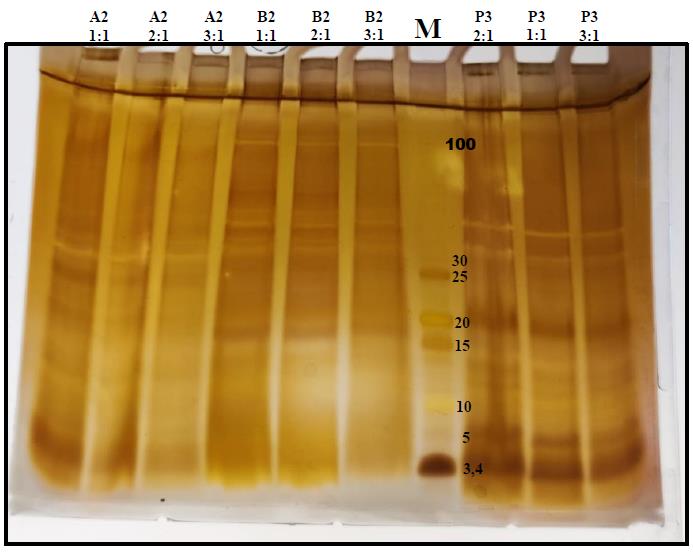
Grouper fish is a type of reef fish that has high economic value and is widely used as fillets in the industry. It is estimated that 50% of the total fish catch is not used as food. Fish solid waste has been utilized as a source of protein and essential amino acids with high nutritional value over the last decade. Enzymatic hydrolysis is the most recommended method to produce fish protein hydrolysates. Enzymatic hydrolysis with various enzymes and hydrolysis time can determine the characteristics of the hydrolysate obtained. The results of hydrolysis of fish bone powder using variations of Papain, Bromelain, and alcalase enzymes, along with time variations of 30-300 minutes, showed the highest yield with papain enzymes at a hydrolysis time of 240 minutes. The degree of hydrolysis above 88% was achieved at an incubation time of 120 minutes with papain enzyme and alkalase and 3 hours with bromelain enzyme. The proximate content of protein hydrolysates from fish bones showed a moisture content of between 7% and 15%, an ash content below 0.5%, and a protein content of 0.46%. The results of protein hydrolysis molecular weight analysis using SDS-PAGE revealed that each enzyme yielded peptides at sizes of 5 and 3.4 kDa, which are expected to have potential as bioactive peptides.
Article Details

This work is licensed under a Creative Commons Attribution-NonCommercial 4.0 International License.
Published articles are under the copyright of the Environment and Natural Resources Journal effective when the article is accepted for publication thus granting Environment and Natural Resources Journal all rights for the work so that both parties may be protected from the consequences of unauthorized use. Partially or totally publication of an article elsewhere is possible only after the consent from the editors.
References
Ahmed R, Haq M, Chun BS. Characterization of marine-derived collagen extracted from the by-products of bigeye tuna (Thunnus obesus). International Journal of Biological Macromolecules 2019;135:668-76.
Ahn CB, Cho YS, Je JY. Purification and anti-inflammatory action of tripeptide from salmon pectoral fin byproduct protein hydrolysate. Food Chemistry 2015;168:151-6.
Alahmad K, Xia W, Jiang Q, Xu Y. Effect of the degree of hydrolysis on nutritional, functional, and morphological characteristics of protein hydrolysate produced from bighead carp (Hypophthalmichthys nobilis) using ficin enzyme. Foods 2022;11:Article No. 1320.
Amiin MK, Subekti S, Masithah ED, Nirmala D, Yunus M, Santanumurti MB, et al. First microphological and molecular parasitological survey of Benedenia in humpback grouper (Cromileptes altivelis) of Lampung and Situbondo, Indonesia. Biodiversitas 2023;24(12):6858-67.
Annisa S, Darmanto YS, Amalia U. The effect of various fish species on fish protein hydrolysate with the addition of papain enzyme. Fisheries Science: Indonesian Journal Of Fisheries Science And Technology 2017;13(1):Article No. 2430 (in Indonesian).
Araujo J, Sica P, Costa C, Márquez, MC. Enzymatic hydrolysis of fish waste as an alternative to produce high value-added products. Waste and Biomass Valorization 2021;12(2):847-55.
Azara R. Preparation and analysis of physicochemical properties of gelatin from grouper fish skin waste (Ephhinephelus sp.). Journal of Food Design 2017;11(1):62-9 (in Indonesian).
Baehaki A, Lestari SD, Romadhoni AR. Hydrolysis of catfish protein using papain enzyme and antioxidant activity of its hydrolysate. Indonesian Fishery Products Processing 2015;18(3):230-9 (in Indonesian).
Bernadeta, Ardiningsih P, Silalahi IH. Determination of optimum conditions for protein hydrolysate from yellowtail fish waste (Caesio cuning) based on organoleptic characteristics. Journal of Equatorial Chemistry 2012;1(1):26-30.
Binsi PK, Shamasundara BA, Dileepa AO, Badiib F, Howell NK. Rheological and functional properties of gelatin from the skin of Bigeye snapper (Priacanthus hamrur) fish: Influence of gelatin on the gel-forming ability of fish mince. Food Hydrocolloids 2007;23(2009):132-45.
Borges S, Odila J, Voss G, Martins S, Rosa A, Couto JA, et al. Fish by-products: A source of enzymes to generate circular bioactive hydrolysates. Molecules 2023;28:Article No. 1155.
Chiodza K, Goosen NJ. Emulsion formation during enzymatic protein hydrolysis and its effect on protein recovery and molecular weight distribution of protein hydrolysates from sardine (Sardina pilchardus) by-products. Biomass Conversion and Biorefinery 2024;14(19):24069-80.
Clemente A. Enzymatic protein hydrolysates in human nutrition: A review. Trends in Food Science and Technology 2000;11(7):254-62.
Coppola D, Lauritano C, Esposito FP, Riccio G, Rizzo C, de Pascale D. Fish waste: From problem to valuable resource. Marine Drugs 2021;19:Article No. 116.
Cropotova J, Kvangarsnes K, Stangeland J, Rustad T. Effect of ultrasound pretreatment prior to enzymatic hydrolysis on physicochemical parameters of fish protein hydrolysates (FPH) extracted from side streams of Atlantic mackerel (Scomber scombrus). Frontiers in Sustainable Food Systems 2024;8:Article No. 1500359.
Da Rosa Zavareze E, Silva CM, Salas-Mellado M, Prentice-Hernandez C. Functionality of bluewing searobin (Prionotus Punctatus) protein hydrolysates obtained from different microbial proteases. Quimica Nova 2009;32(7):1739-43.
Dong S, Zeng M, Wang D, Liu Z, Zhao Y, Yang H. Antioxidant and biochemical properties of protein hydrolysates prepared from Silver carp (Hypophthalmichthys molitrix). Food Chemistry 2008;107(4):1485-93.
Dong Y, Yan W, Zhang X, Di Dai ZY, Zhang YQ. Steam explosion-assisted extraction of protein from fish backbones and effect of enzymatic hydrolysis on the extracts. Foods 2021;10(8):1-15.
Edison, Dewita, Karnila R, Yoswaty D. The hydrolysis of fish protein from giant mudskipper (Periophthalmodon schlosseri) using alcalase enzyme. Current Research in Nutrition and Food Science 2020;8(3):1056-63.
Efendi DS, Adrianto L, Yonvitner, Wardiatno Y. An evaluation of grouper and snapper fisheries management policy in Saleh Bay, Indonesia. IOP Conference Series: International Symposium on Aquatic Sciences and Resources Management; 2021 Nov 16-17; Bogor, West Java: Indonesia; 2020.
Gajanan PG, Elavarasan K, Shamasundar BA. Bioactive and functional properties of protein hydrolysates from fish frame processing waste using plant proteases. Environmental Science and Pollution Research 2016;23(24):24901-11.
Gao R, Yu Q, Shen Y, Chu Q, Chen G, Fen S, et al. Production, bioactive properties, and potential applications of fish protein hydrolysates: Developments and challenges. Trends in Food Science and Technology 2021;110:687-99.
Harnedy PA, FitzGerald RJ. Bioactive peptides from marine processing waste and shellfish: A review. Journal of Functional Foods 2012;4(1):6-24.
Haslaniza H, Maskat MY, Wan Aida WM, Mamot S, Saadiah I. Optimization of enzymatic hydrolysis of cockle (Anadara granosa) meat wash water precipitate for the development of seafood flavor. International Food Research Journal 2013;20(6):3053-9.
Henriques A, Vázquez JA, Valcarcel J, Mendes R, Bandarra NM, Pires C. Characterization of protein hydrolysates from fish discards and by-products from the north-west Spain fishing fleet as potential sources of bioactive peptides. Marine Drugs 2021;19:Article No. 338.
Honrado A, Miguel M, Ardila P, Beltrán JA, Calanche JB. From waste to value: Fish protein hydrolysates as a technological and functional ingredient in human nutrition. Foods 2024;13:Article No. 3120.
Hoyle NT, Merritt JH. Quality of fish protein hydrolysates from herring (Clupea harengus). Journal of Food Science 1994;59(1):76-9.
Ishak NH, Sarbon NM. A review of protein hydrolysates and bioactive peptides deriving from wastes generated by fish processing. Food and Bioprocess Technology 2018;11(1):2-16.
Jaziri AA, Sukoso. Characterization of protease from marine clam coarse extract and its activity in hydrolyzing groundfish protein. Journal of Fisheries and Marine Science 2017;1(2):78-87 (in Indonesian).
Kao YF, Chai HJ, Tsai CJ, Tsai TY, Liu TH, Yi TK, et al. Development of functional foods from grouper fish-bone residues to enhance muscle strength and exercise endurance in mice. Frontiers in Sustainable Food Systems 2024;8:1-12.
Kaveh S, Mahoonak AS, Erfanimoghadam V, Ghorbani M, Gholamhosseinpour A, Reisi M. Evaluation the effect of hydrolysis conditions and type of protease on the degree of hydrolysis and antioxidant properties of the protein hydrolysate from the skipjack fish (Katsuwonus pelamis) viscera by the response surface methodology. Journal of Food Science and Technology 2024;20(144):131-52.
Khasanah M, Nurdin N, Sadovy de Mitcheson Y, Jompa J. Management of the grouper export trade in Indonesia. Reviews in Fisheries Science and Aquaculture 2020;28(1):1-15.
Korkmaz K, Tokur B. Optimization of hydrolysis conditions for the production of protein hydrolysates from fish wastes using response surface methodology. Food Bioscience 2022;45: Article No. 101312.
Kristinsson HG, Rasco BA. Biochemical and functional properties of Atlantic salmon (Salmo salar) muscle proteins hydrolyzed with various alkaline proteases. Journal of Agricultural and Food Chemistry 2000;48(3):657-66.
Kumar V, Muzaddadi AU, Mann S, Balakrishnan R, Bembem K, Kalnar Y. Utilization of fish processing waste: A waste to wealth approach. Compendium of ICAR Summer School: Emerging Post-Harvest Engineering and Technological Interventions for Enhancing Farmer’s Income; 2018. p. 127-31.
Liaset B, Lied E, Espe M. Enzymatic hydrolysis of by-products from the fish-filleting industry; chemical characterisation and nutritional evaluation. Journal of the Science of Food and Agriculture 2000;80(5):581-9.
Liu M, Li Z, Chen Q, Yang X, Chen J, Zhang L, et al. Preparation and characterization of grouper bone peptides-calcium complex by lactic acid bacteria fermentation. Lwt-Food Science and Technology 2024;201:Article No. 116224.
Martínez-Alvarez O, Chamorro S, Brenes A. Protein hydrolysates from animal processing by-products as a source of bioactive molecules with interest in animal feeding: A review. Food Research International 2015;73:204-12.
Masri M. Isolation and measurement of bromelin enzyme activity from crude extract of pineapple stem (Ananas comosus) at variation of pH. Biosel: Biology Science and Education 2013;2(2):Article No. 80 (in Indonesian).
Mo WY, Man YB, Wong MH. Use of food waste, fish waste and food processing waste for China’s aquaculture industry: Needs and challenge. Science of the Total Environment 2018;(613-614):635-43.
Nasution EZ, Nasution LM. Enzymatization of nila fish (Oreochromis niloticus) protein hydrolysate by combination of bromelin and pepsin enzymes. Journal of Chemical Natural Resources 2024;6(2):122-30.
Ngo DH, Ryu BM, Kim SK. Active peptides from skate (Okamejei kenojei) skin gelatin diminish angiotensin-i converting enzyme activity and intracellular free radical-mediated oxidation. Food Chemistry 2014;143:246-55.
Nguyen HT, Bao HND, Dang HTT, Tómasson T, Arason S, Gudjónsdóttir M. Protein characteristics and bioactivity of fish protein hydrolysates from Tra Catfish (Pangasius hypophthalmus) side stream isolates. Foods 2022;11(24): Article No. 4102.
Nilna FNM, Muyassaroh, Azizah W, Sabrina M. Effect of temperature variation and drying time on the preparation of papain enzyme from papaya leaf extract. Journal Atmosphere 2021;2(2):15-21.
Nothling MD, Xiao Z, Bhaskaran A, Blyth MT, Bennett CW, Coote ML, et al. Synthetic catalysts inspired by hydrolytic enzymes. ACS Catalysis 2019:9(1):168-87.
Nurdiani R, Firdaus M, Prihanto AA, Jaziri AA, Jati MR, Abdurrahman TR, et al. Enzymatic hydrolysis of protein hydrolysate from Pangasius sp. by-product using Bromelain. Current Research in Nutrition and Food Science 2024; 12(1):125-36.
Nurhayati T, Salamah E, Cholifah, Nugraha R. Process optimization of hydrolysate preparation of white Snapper Offal. Indonesian Journal of Fishery Product Processing 2014;17(1):42-52 (in Indonesian).
Palla ANF, Metusalach, Amir N. Protein hydrolyzate of grouper viscera: Effects of crude bromelain extract concentration and hydrolysis time on yield and degree of hydrolysis. International Journal of Applied 2022;6(2):222-9.
Patil SP, Goswami A, Kalia K, Kate AS. Plant derived bioactive peptides: A treatment to cure diabetes. International Journal of Peptide Research and Therapeutics 2020;26(2):955-68.
Petrova I, Tolstorebrov I, Eikevik TM. Production of fish protein hydrolysates: A step-by-step approach to technological aspects, equipment used, significant energy costs, and methods for minimizing them. International Aquatic Research 2018;10(3):223-41.
Pires C, Leitão M, Sapatinha M, Gonçalves A, Oliveira H, Nunes ML, et al. Protein hydrolysates from salmon heads and cape hake by-products: Comparing enzymatic method with subcritical water extraction on bioactivity properties. Foods 2024;13:Article No. 2418.
Raeesi R, Shabanpour B, Pourashouri P. Use of fish waste to silage preparation and Its application in animal nutrition. Online Journal of Animal and Feed Research 2023;13(2):79-88.
Raksakulthai R, Haard NF. Exopeptidases and their application to reduce bitterness in food: A review. Critical Reviews in Food Science and Nutrition 2003;43(4):401-45.
Restiani R. Enzymatic hydrolysis of Nyamplung (Calophyllum inophyllum) seed cake protein using Bromelain. Biota: Scientific Journal of Life Sciences 2017;1(3):103-10.
Rumondang R, Mulyani I, Aulia P. Feeding an artificial rush fish for the growth and survival of mud grouper (Epinephelus lanceolatus). AACL Bioflux 2023;16(1):259-69.
Sapatinha M, Camacho C, Pais-Costa AJ, Fernando AL, Marques A, Pires C. Enzymatic hydrolysis systems enhance the efficiency and biological properties of hydrolysates from frozen fish processing co-products. Marine Drugs 2025; 23:Article No. 14.
Shakila RJ, Jeevithan E, Varatharajakumar A, Jeyasekaran G, Sukumar D. Functional characterization of gelatin extracted from bones of red snapper and grouper in comparison with mammalian gelatin. LWT - Food Science and Technology 2012;48(1):30-6.
Siddik MAB, Howieson J, Fotedar R, Partridge GJ. Enzymatic fish protein hydrolysates in finfish aquaculture: A review. Reviews in Aquaculture 2021;13(1):406-30.
Silva CM, da Fonseca RA dos S, Prentice C. Comparing the hydrolysis degree of industrialization byproducts of Withemout croaker (Micropogonias furnieri) using microbial enzymes. International Food Research Journal 2014; 21(5):1757-61.
Tacias-Pascacio VG, Morellon-Sterling R, Siar EH, Tavano O, Berenguer-Murcia Á, Fernandez-Lafuente R. Use of Alcalase in the production of bioactive peptides: A review. International Journal of Biological Macromolecules 2020;165:2143-96.
Tirtadanu, Prihatiningsih, Yusuf HN, Zamroni A, Amri K, Chodrijah U. Assessing the stock status of areolate grouper (Epinephelus areolatus) in Java Sea, Indonesia. Regional Studies in Marine Science 2023;66:Article No. 103116.
Udenigwe CC, Aluko RE. Food protein-derived bioactive peptides: Production, processing, and potential health benefits. Journal of Food Science 2012;77(1):11-24.
Vàzquez JA, Comesa˜na S, Soengas JL, Bermúdez MPR, Rotllant J, Varcalcel J. Optimal and sustainable production of tailored fish protein hydrolysates from tuna canning wastes and discarded blue whiting: Effect of protein molecular weight on chemical and bioactive properties. Science of the Total Environment 2024;939:Article No. 173461.
Walker JM. The Protein Protocols Handbook. Totowa, New Jersey: Humana Press Inc; 2002.
Wang JS, Zhao MM, Zhao QZ, Bao Y, Jiang YM. Characterization of hydrolysates derived from enzymatic hydrolysis of wheat gluten. Journal of Food Science 2007;72(2):103-7.
Yang JI, Tang JY, Liu YS, Wang HR, Lee SY, Yen CY, et al. Roe protein hydrolysates of giant grouper (Epinephelus lanceolatus) inhibit cell proliferation of oral cancer cells involving apoptosis and oxidative stress. BioMed Research International 2016;2016:Article No. 8305073.
Zhang M, Huang TS, Mu TH. Production and in vitro gastrointestinal digestion of antioxidant peptides from enzymatic hydrolysates of sweet potato protein affected by pretreatment. Plant Foods for Human Nutrition 2019;74:225-31.
Zhang X, He H, Xiang J, Yin H, Hou T. Selenium-containing proteins / peptides from plants : A review of the structures and functions. Journal of Agricultural and Food Chemistry 2020;68(51):15061-73.
