Spatiotemporal Trends in Temperature and Rainfall in Northwestern Vietnam (2009-2024) 10.32526/ennrj/24/20250046
Article Sidebar
Main Article Content
Abstract
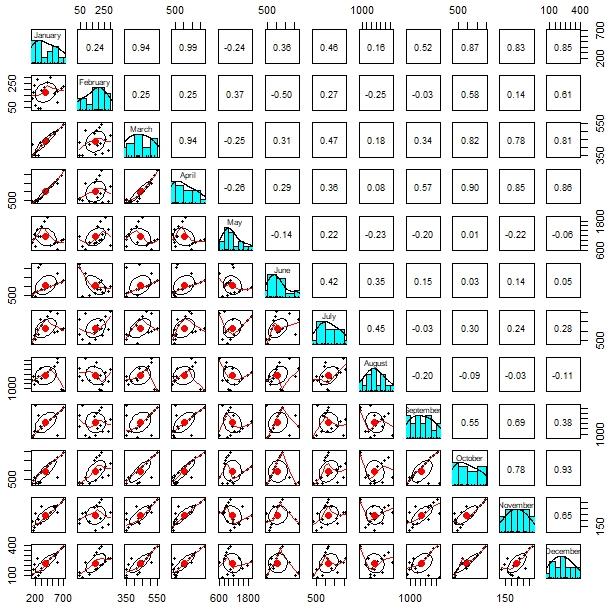
The present study sought to optimize the data from eleven Regional Hydro- Meteorological Station in the Northwestern Vietnam. The study results indicated that that the average temperature has tended to increase, which is lower than the average global surface temperature. Still, the maximum temperature, and lowest temperature are higher than the global average (values 0.6, 0.3, and 3.0°C, respectively). The rainy season (23.7°C) generally exhibits warmer temperatures than the dry season (16.9°C). There is a positive correlation between temperatures in consecutive months during both the dry and rainy seasons (r values): 0.75 (September, October), 0.53 (October, December), 0.51 (May, June) 0.46 (August, October), 0.45 (November, December), and 0.38 (April, May), respectively. There is negative correlation between the temperatures of months that are in the same season but far apart, R-values -0.61 (February, December), -0.58 (February, November), -0.56 (April, September), -0.31 (April, October), respectively. The total rainfall and total minimum rainfall showed decreasing trend were 127 mm, and 2.8 mm, respectively. By contrast, total rainfall max tends to increase by 230 mm. The highest rainfall was concentrated from May to October (1,219 mm). Higher correlation values for rainfall were observed in winter (January to March, and October to December), at 0.65, 0.78, 0.85, 0.93, 0.94, and 0.99 compared to summer (April to September), with r values of 0.29, 0.36, 0.57, 0.42, and 0.45, respectively. In a year, positive correlations between temperature and rainfall predominate most months of spring (January, February, and March), autumn (July, August, and September), and winter (October, November, and December), R-values: 0.59, 0.36, 0.44, 0.53, respectively, while negative correlations are more common in April, May, and June (summer) with the r values of -0.33, -0.16, and -0.25, respectively. The present study may provide a valuable and future climate, and rainfall projections.
Article Details

This work is licensed under a Creative Commons Attribution-NonCommercial 4.0 International License.
Published articles are under the copyright of the Environment and Natural Resources Journal effective when the article is accepted for publication thus granting Environment and Natural Resources Journal all rights for the work so that both parties may be protected from the consequences of unauthorized use. Partially or totally publication of an article elsewhere is possible only after the consent from the editors.
References
Abbam T, Johnson FA, Dash J, Padmadas SS. Spatiotemporal variations in rainfall and temperature in Ghana over the twentieth century, 1900-2014. Earth and Space Science 2018;5(4):120-32.
Balathandayutham K, Mayilswami C. Evaluation of spatial and temporal characteristics of rainfall variability on Parambikulam Aliyar Palar (Pap) Basin, Tamil Nadu, India. Trends in Biosciences 2014;7(3):183-90.
Barua S, Muttil N, Ng AWM, Perera BJC. Rainfall trend and its implications for water resource management within the Yarra River catchment, Australia. Hydrological Processes 2013;27(12):1727-38.
Bonini I, Rodrigues C, Dallacort R, Marimon Junior BH, Carvalho MAC. Rainfall and deforestation in the municipality of Colíder, southern Amazon. Revista Brasileira de Meteorologia 2014;29:483-93.
Cao J, Zhou W, Zheng Z, Ren T, Wang W. Within-city spatial and temporal heterogeneity of air temperature and its relationship with land surface temperature. Landscape and Urban Planning 2021;206:Article No. 103979.
Cong RG, Brady M. The interdependence between rainfall and temperature: Copula analyses. The Scientific World Journal 2012;(1):Article No. 405675.
Chacón RE, Fernandez W. Temporal and spatial rainfall variability in the mountainous region of the Reventazón river basin, Costa Rica. Journal of Climatology 1985;5(2):175-88.
Chowhan V, Chandargi DM, Goudappa SB, Kammar SK, Koppalakar BG, Lokesh GB. Assessing farmer vulnerability to climate change in Karnataka: A focus on index development. International Journal of Environment and Climate Change 2023;13(11):130-42.
Degenhardt L, Ólafsson H. Persistence of observed air temperatures in Iceland. International Journal of Climatology 2019;39(3);1262-75.
Dzupire NC, Ngare P, Odongo L. A copula based bi-variate model for temperature and rainfall processes. Scientific African 2020;8:Article No. 00365.
Emekwuru N, Ejohwomu O. Temperature, humidity and air pollution relationships during a period of rainy and dry seasons in Lagos, West Africa. Climate 2023;11(5):Article No. 113
Ganeshkumar B, Krishna GG. Spatiotemporal variability of temperature and its extremes over an agro-ecological region of Tamil Nadu, India. Polish Journal of Environmental Studies 2020;29(5):3561-8.
Getnet GT, Dagnew AB, Ayal DY. Spatiotemporal variability and trends of rainfall and temperature in the tropical moist montane ecosystem: Implications to climate-smart agriculture in Geshy watershed, Southwest Ethiopia. Climate Services 2023;30:Article No. 100384.
González-Pérez A, Álvarez-Esteban R, Penas A, del Río S. Analysis of recent rainfall trends and links to teleconnection patterns in California (US). Journal of Hydrology 2022;612:Article No. 128211.
Han JM, Kamber JP. Data Mining - Concepts and Techniques. 3rd ed. USA: Elsevier Inc; 2012.
He S, Hao C. Analysis on spatial-temporal variation characteristics of climate in Qinling-Huaihe demarcation zone since 1961. Ecological Indicators 2024;158:Article No. 111345
Hoang LT, Roshetko JM, Huu TP, Pagella T, Mai PN. Agroforestry-the most resilient farming system for the hilly Northwest of Vietnam. International Journal of Agriculture System 2017;5(1):1-23.
Kanno H. Strongly negative correlation between monthly mean temperatures in April and August since 1998 in northern Japan. Journal of the Meteorological Society of Japan 2013;91(3);355-73.
Kaur N, Yousuf A, Singh MJ. Long term rainfall variability and trend analysis in lower Shivaliks of Punjab, India. Mausam 2021;72(3):571-82.
Lhotka O, Kyselý J. Precipitation-temperature relationships over Europe in CORDEX regional climate models. International Journal of Climatology 2022;42(9):4868-80.
Madden RA, Williams J. The correlation between temperature and precipitation in the United States and Europe. Monthly Weather Review 1978;106(1):142-7.
Massoud EC, Lim YK, Andrews LC, Girotto M. Connecting global modes of variability to climate in High Mountain Asia. Atmosphere 2024;15(2):Article No. 142.
Meseret Z, Belay S. Spatial and temporal variability in temperature and rainfall over Mecha Area, Ethiopia. International Journal of Scientific Research in Multidisciplinary Studies 2019;5(12):56-65.
Natayu A, Kamila FT, Dananjaya IBGG, Reflin RR, Fikri MR. Understanding the climate behavior through data interpretation: Java-Bali-Nusa Tenggara case. Indonesian Journal of Computing, Engineering, and Design 2021; 3(2):130-45.
Nenwiini S, Kabanda TA. Trends and variability assessment in rainfall of Vhembe District South Africa. Proceedings of the Society of South African Geographers (SSAG) Conference; 2012 Jun 20-22; Department of Environmental and Geographical Science, University of Cape Town: 2012. p. 171-6.
Ngo DT, Bui TKH, Trends and return frequencies of hot and cold extreme events in Northern Vietnam from 1961-2018. VNU Journal of Science 2023;39(2):31-42.
Nguyen-Dang M, Nguyen-Minh T, Sasaki h, Takayabu I. A study of seasonal rainfall in Vietnam at the end of 21st century according to the Non-Hydrostatic Regional Climate Model. Vietnam Journal of Science, Technology and Engineering 2018;60(3):89-96.
Papalexiou SM, AghaKouchak A, Trenberth KE, Foufoula‐Georgiou E. Global, regional, and megacity trends in the highest temperature of the year: Diagnostics and evidence for accelerating trends. Earth’s Future 2018;6(1):71-9.
Pearson K. Determination of the coefficient of correlation. Science 1909;30(757):23-5.
Prajapati R, Talchabhadel R, Silwal P, Upadhyay S, Ertis B, Thapa BR, et al. Less rain and rainy days-lessons from 45 years of rainfall data (1971-2015) in the Kathmandu Valley, Nepal. Theoretical and Applied Climatology 2021;145(3):1369-83.
Ramos da Silva R, Werth D, Avissar R. Regional impacts of future land-cover changes on the Amazon basin wet-season climate. Journal of Climate 2008;21(6):1153-70.
Rodrigo FS. A simple approach for the study of the relationship between temperature and precipitation. Theoretical and Applied Climatology 2022;150(1):215-28.
Rusticucci M, Penalb O. Interdecadal changes in the precipitation seasonal cycle over Southern South America and their relationship with surface temperature. Climate Research 2000;16(1):1-15.
Shahid S. Spatio-temporal variability of rainfall over Bangladesh during the time period 1969-2003. Asia-Pacific Journal of Atmospheric Science 2009;45(3):375-89.
Shukla PR, Skea J, Slade R, Khourdajie Al A, van Diemen R, McCollum D, et al. Climate Change 2022: Mitigation of Climate Change. Contribution of working group III to the sixth assessment report of the Intergovernmental Panel on Climate Change 2022. Cambridge University Press; 2022.
Vose R, Easterling DR, Gleason BE. Maximum and minimum temperature trends for the globe: An update through 2004. Geophysical Research Letters 2005;32:Article No. L23822.
Worku T, Khare D, Tripathi SK. Spatiotemporal trend analysis of rainfall and temperature, and its implications for crop production. Journal of Water and Climate Change 2019;10(4):799-817.
Zhao W, Mak K. The relationship between precipitation and temperature over the contiguous United States. Journal of Climate 1993;6(6):1232-6.
Zhou T. New physical science behind climate change: What does IPCC AR6 tell us? The Innovation (Camb) 2021;2(4):Article No. 100173.
Zongxing L, He Y, Wang P, Theakstone WH, An W, Wang X, et al. Changes of daily climate extremes in southwestern China during 1961-2008. Global and Planetary Change 2012;80: 255-72.