Levels of Microplastics in Aquatic Ecosystem Components of the Kedung Ombo Reservoir, Central Java: Analysis of Water, Tilapia (Oreochromis mossambicus), Sediment, Macroalgae, and Gastropods 10.32526/ennrj/23/20250071
Article Sidebar
Main Article Content
Abstract
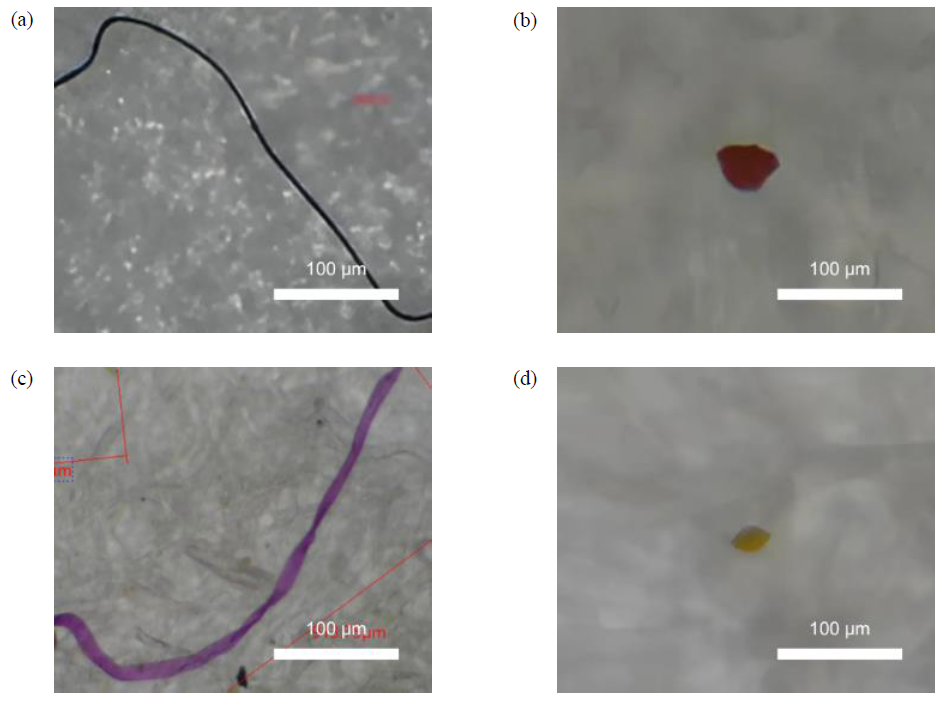
The widespread use of plastics in daily activities poses a significant threat to aquatic environments and human health, primarily because plastics degrade into microplastics that easily accumulate in biota and may cause harm when ingested. The aim of this study was to identify the abundance and types of microplastics in water, gastropods, tilapia fish, macroalgae, and sediments. This study was conducted from September to December 2024 in the Kedung Ombo Reservoir. The abundance, shape, and size of microplastics were analyzed using an Olympus CX23 binocular microscope with a 4×/0.10 objective lens. Polymer type analysis of the microplastics was conducted using Fourier Transform Infrared (FTIR) spectroscopy. The abundance of microplastics found at each observation station, consisting of water, gastropods, tilapia fish, macroalgae, and sediment samples, was 122, 2,088, 2,700, 1,036, and 8,847 particles/kg, respectively. Microplastics were classified based on their size into small (<0.5 mm), medium (0.5-<1 mm), and large (1-5 mm), with percentages of 72%, 13%, and 15%, respectively. The shapes of the detected microplastics included fibers (39%), fragments (19%), films (17%), pellets (15%), and foams (11%). The microplastics detected were black (33%), red (15%), purple (6%), yellow (12%), blue (8%), green (6%), and clear (20%). The microplastics identified were polyethylene terephthalate (PET), polyethylene (PE), and polystyrene (PS). The abundance of microplastics has been detected in various compartments of the Kedung Ombo Reservoir. This needs to be monitored regularly, because microplastic accumulation on organisms can be harmful to health and the environment.
Article Details

This work is licensed under a Creative Commons Attribution-NonCommercial 4.0 International License.
Published articles are under the copyright of the Environment and Natural Resources Journal effective when the article is accepted for publication thus granting Environment and Natural Resources Journal all rights for the work so that both parties may be protected from the consequences of unauthorized use. Partially or totally publication of an article elsewhere is possible only after the consent from the editors.
References
Adji BK, Octodhiyanto I, Rahmayanti R, Nugroho AP. Microplastic pollution in Rawa Jombor Reservoir, Klaten, Central Java, Indonesia: Accumulation in aquatic fauna, heavy metal interactions, and health risk assessment. Water, Air, and Soil Pollution 2022;233(4):1-23.
Anjeli UG, Sartimbul A, Sulistiyati TD, Yona D, Iranawati F, Seftiyawan FO, et al. Microplastics contamination in aquaculture-rich regions: A case study in Gresik, East Java, Indonesia. Science of the Total Environment 2024;927:1-13.
Ariyunita S, Subchan W, Alfath A, Nabilla NW, Nafar SA. Analysis of microplastic abundance in water and gastropods in the Bedadung River Segment, Kaliwates District, Jember Regency. Jurnal Biosense 2022;5(2):47-51 (in Indonesian).
Aryani D, Khalifa MA, Herjayanto M, Solahudin EA, Rizki EM, Halwatiyah W, et al. Penetration of microplastics (polyethylene) to several organs of Nile Tilapia (Oreochromis niloticus). The 2nd International Conference on Agriculture and Rural Development; 2020 Nov 16; Serang City, Banten: Indonesia; 2021.
Bao R, Cheng Z, Peng L, Mehmood T, Gao L, Zhuo S, et al. Effects of biodegradable and conventional microplastics on the intestine, intestinal community composition, and metabolic levels in Tilapia (Oreochromis mossambicus). Aquatic Toxicology 2023;265:1-11.
Berlino M, Mangano MC, De Vittor C, Sarà G. Effects of microplastics on the functional traits of aquatic benthic organisms: A global-scale meta-analysis. Environmental Pollution 2021;285:1-10.
Buldan R, Suharyanto S, Najib N, Sadono KW. Seepage analysis on the safety of the Kedung Ombo Reservoir in Grobogan, Central Java. Journal of Hydraulic Engineering 2021;12(2):79-92 (in Indonesian).
Cordova MR, Nurhati IS, Shiomoto A, Hatanaka K, Saville R, Riani E. Spatiotemporal macrodebris and microplastic variations linked to domestic waste and textile industry in the supercritical Citarum River, Indonesia. Marine Pollution Bulletin 2022;175:1-11.
Cordova MR, Purwiyanto AIS, Suteja Y. Abundance and characteristics of microplastics in the northern coastal waters of Surabaya, Indonesia. Marine Pollution Bulletin 2019;142:183-8.
Emenike EC, Okorie CJ, Ojeyemi T, Egbemhenghe A, Iwuozor KO, Saliu OD, et al. From oceans to dinner plates: The impact of microplastics on human health. Heliyon 2023;9(10):1-19.
Ephsy D, Raja S. Characterization of microplastics and its pollution load index in freshwater Kumaraswamy Lake of Coimbatore, India. Environmental Toxicology and Pharmacology 2023;101:1-12.
Fardullah M, Islam MS, Akther K, Hossain MT, Robel FN. Spatial distribution, abundance, and risk assessment of microplastics in the surface water of Kaptai Lake: Southeast Asia’s largest artificial reservoir. Journal of Hazardous Materials Advances 2025;18:Article No. 100640.
Frias JP, Nash R. Microplastics: Finding a consensus on the definition. Marine Pollution Bulletin 2019;138:145-7.
Haque MR, Ali MM, Ahmed W, Siddique MAB, Akbor MA, Islam MS, et al. Assessment of microplastics pollution in aquatic species (Fish, Crab, And Snail), water, and sediment from the Buriganga River, Bangladesh: An ecological risk appraisals. Science of the Total Environment 2023;857:1-15.
Hassine IB, Abidli S, Lahbib Y, El Menif NT. First characterization and spatial distribution of microplastics in Sardina pilchardus fish gathered along the northern Tunisian coast. Ecohydrology and Hydrobiology 2024;25:414-21.
Ismanto A, Hadibarata T, Kristanti RA, Sugianto DN, Widada S, Atmodjo W, et al. A novel report on the occurrence of microplastics in Pekalongan River Estuary, Java Island, Indonesia. Marine Pollution Bulletin 2023a;196:1-8.
Ismanto A, Hadibarata T, Sugianto DN, Zainuri M, Kristanti RA, Wisha UJ, et al. First evidence of microplastics in the water and sediment of Surakarta City River Basin, Indonesia. Marine Pollution Bulletin 2023b;196:1-7.
Jimoh JO, Rahmah S, Mazelan S, Jalilah M, Olasunkanmi JB, Lim LS, et al. Impact of face mask microplastics pollution on the aquatic environments and aquaculture organisms. Environmental Pollution 2023;317:1-10.
Kalčíková G. Beyond ingestion: Adhesion of microplastics to aquatic organisms. Aquatic Toxicology 2023;258:1-5.
Käppler A, Fischer D, Oberbeckmann S, Schernewski G, Labrenz M, Eichhorn KJ, et al. Analysis of environmental microplastics by vibrational microspectroscopy: FTIR, Raman, or both? Analytical and Bioanalytical Chemistry 2016;408:8377-91.
Laksono OB, Suprijanto J, Ridlo A. Microplastic content in sediment in Bandengan Waters, Kendal Regency. Journal of Marine Research 2021;10(2):158-64 (in Indonesian).
Larasati M, Rudiyanti S, Rahman A, Haeruddin H, Prakoso K. The relationship between phytoplankton community structure and nutrient concentration and turbidity in Kedung Ombo Reservoir. Indonesian Journal of Agricultural Sciences 2024;29(3):323-30 (in Indonesian).
Lee HC, Khan MM, Asmaa’Jaya N, Marshall DJ. Microplastic accumulation in oysters along a Bornean Coastline (Brunei, South China Sea): Insights into local sources and sinks. Marine Pollution Bulletin 2022;177:1-10.
Leitão IA, Van Schaik L, Iwasaki S, Ferreira AJD, Geissen V. Accumulation of airborne microplastics on leaves of different tree species in the urban environment. Science of the Total Environment 2024;948:Article No. 174907.
Li X, Liu W, Zhang J, Wang Z, Guo Z, Ali J, et al. Effective removal of microplastics by Filamentous algae and its magnetic biochar: Performance and mechanism. Chemosphere 2024;358:Article No. 142152.
Nasution I, Wulandari DA. Sedimentation dynamics of Kedungombo Reservoir, Grobogan Regency, Central Java Province. Cycle: Civil Engineering Journal 2021;7(2):106-18 (in Indonesian).
Pratomo GN, Nurcahyo H, Firdaus NR. Fermentation profile of tilapia fish (Oreochromis mossambicus) with the addition of NaCl. Al-Kauniyah: Biology Journal 2020;13(2):158-66 (in Indonesian).
Primawati L, Muslim M, Suseno H. Levels of microplastics in common carp (Cyprinus carpio), apple snails (Pila ampullacea), and macroalgae (Filamentous Algae) in the Kedung Ombo Reservoir, Central Java, Indonesia. Egyptian Journal of Aquatic Biology and Fisheries 2025;29(2):2625-49.
Purnomo E, Chika S. The potential of fish diversity in Kedung Ombo Reservoir as a sustainable food supply provider. Journal of Biogeneration 2022;7(1):99-107 (in Indonesian).
Rahmayanti R, Adji BK, Nugroho AP. Microplastic pollution in the inlet and outlet networks of Rawa Jombor Reservoir: Accumulation in aquatic fauna, interactions with heavy metals, and health risk assessment. Environmental and Natural Resources Journal 2022;20(2):192-208.
Rifai A, Rochaddi B, Fadika U, Marwoto J, Setiyono H. Study of the influence of monsoon winds on the distribution of sea surface temperatures (case study: Pangandaran Waters, West Java). Indonesian Journal of Oceanography 2020;2(1):98-104 (in Indonesian).
Shen M, Li Y, Qin L, Chen X, Ao T, Liang X, et al. Distribution and risk assessment of microplastics in a source water reservoir in Central China. Scientific Reports 2025; 15(1):Article No. 468.
Suparno S, Deswati D, Fitri WE, Pardi H, Putra A. Microplastics in the water of Batang Anai Estuary, Padang Pariaman Regency, Indonesia: Assessing effects on riverine plastic load in the marine environment. Environment and Natural Resources Journal 2024;22(1):55-64.
Supriatna I, Risjani Y, Kurniawan A, Yona D. Microplastics contaminant in Telescopium telescopium (gastropods), the keystone mangrove species and their habitat at brackish water pond, East Java, Indonesia. Emerging Contaminants 2023;9(4):Article No. 100245.
Taurozzi D, Gallitelli L, Cesarini G, Romano S, Orsini M, Scalici M. Passive biomonitoring of airborne microplastics using lichens: A comparison between urban, natural and protected environments. Environmental International 2024;187:1-10.
Tsuchiya M, Kitahashi T, Nakajima R, Oguri K, Kawamura K, Nakamura A, et al. Distribution of microplastics in bathyal-to-Hadal-depth sediments and transport processes along the deep-sea canyon and the Kuroshio extension in the northwest Pacific. Marine Pollution Bulletin 2023;199:1-12.
Veerasingam S, Ranjani M, Venkatachalapathy R, Bagaev A, Mukhanov V, Litvinyuk D, et al. Contributions of Fourier transform infrared spectroscopy in microplastic pollution research: A review. Critical Reviews in Environmental Science and Technology 2021;51:2681-743.
Wijayanti DP, Indrayanti E, Haryanti D. Coral Reef Ecosystems and Strategies for Facing Climate Change. Malang, Indonesia: Intimedia; 2023 (in Indonesian).
Xia F, Tan Q, Qin H, Wang D, Cai Y, Zhang J. Sequestration and export of microplastics in urban river sediments. Environment International 2023;181:1-12.
Yona D, Zahran MF, Fuad MAZ, Prananto YP, Harlyan LI. Microplastics in Water: Types, Sampling Methods, and Laboratory Analysis. Malang, Indonesia: UB Press; 2021 (in Indonesian).
Zhao W, Li J, Liu M, Wang R, Zhang B, Meng XZ, et al. Seasonal variations of microplastics in surface water and sediment in an inland river drinking water source in Southern China. Science of the Total Environment 2023;908:1-13.
