Effect of Climate Variability on Chili Pepper (Capsicum frutescens L.) Cultivation in Indonesia 10.32526/ennrj/23/20250097
Article Sidebar
Main Article Content
Abstract
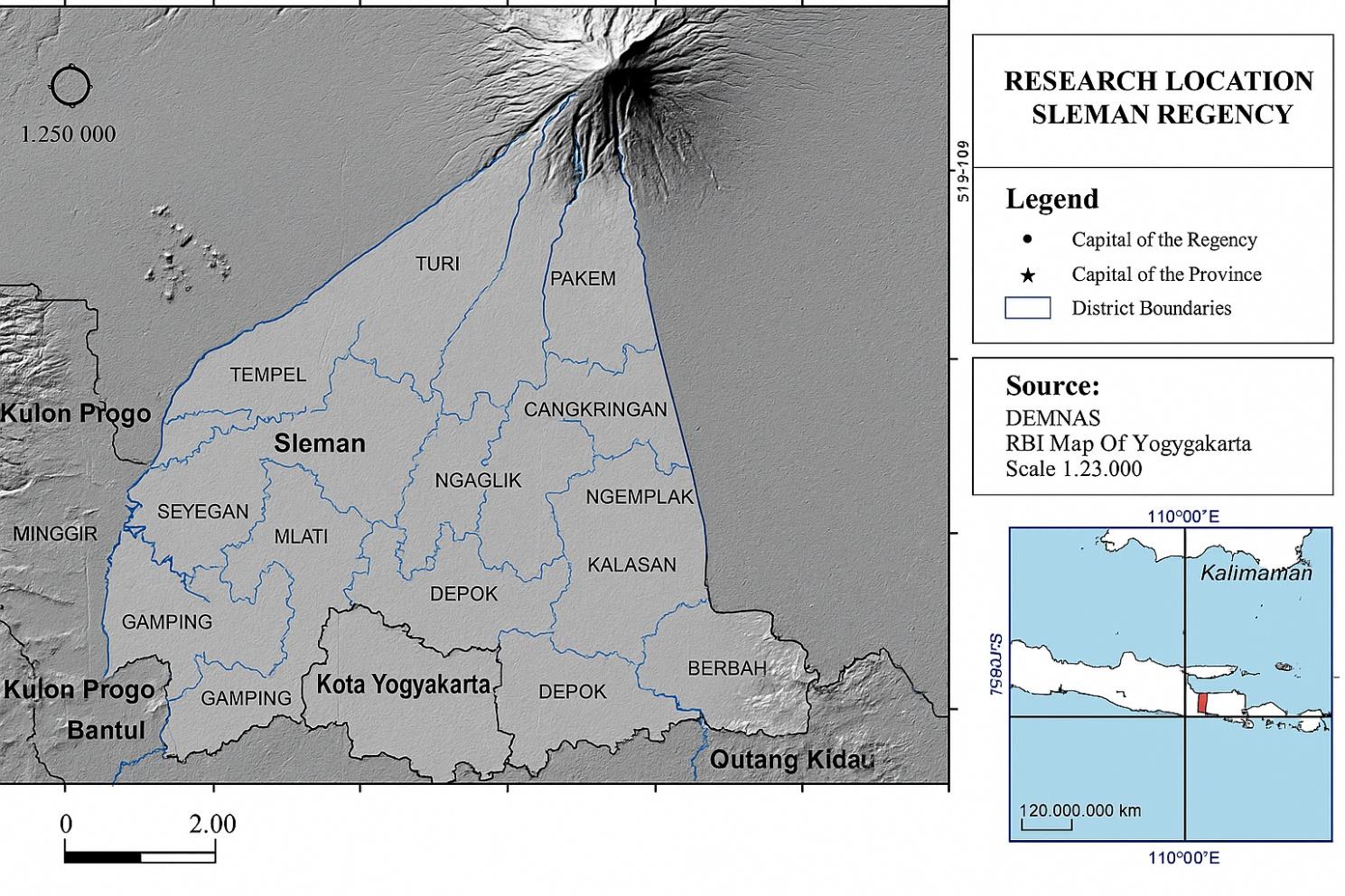
Significant shifts in climate patterns, particularly in rainfall and frequency of rainy days, are factors contributing to high variability in cultivation of agricultural products such as chili peppers. Therefore, this study investigated the impact of seasonal climate variability on chili pepper (Capsicum frutescens L.) production in Sleman Regency, of Central Java, Indonesia. Statistical methods including analysis of variance (ANOVA), principal component analysis (PCA), and Pearson correlation were used to examine the influence of various climate and seasonal factors such as rainfall, air temperature, humidity, rainy days, dry season onset, and duration on chili productivity. The results showed that total rainfall and frequency of rainy days significantly affected chili productivity, with correlation coefficients of +0.579 and +0.492 (p<0.05), and ANOVA confirming a strong relationship (F=260.75, p<0.001). This showed that rainfall distribution and frequency were critical factors influencing yield variability. Statistical analyses correlated with climate variability index calculations further confirmed significant climate changes in the region. Based on the results, both total rainfall and seasonal distribution were critical factors influencing chili pod productivity, emphasizing the importance of agricultural planning and adaptation strategies under changing climate conditions. The novelty of this study was in local-scale seasonal analysis, which used a climate variability index to detect extreme variability. When combined with multivariate statistical triangulation (correlation, PCA, and ANOVA), it offered robust evidence for region-specific adaptation strategies for chili farmers. The results showed the importance of including climate indicators in agricultural policy planning. Moreover, further studies were recommended to explore spatial climate trends across broader regions.
Article Details

This work is licensed under a Creative Commons Attribution-NonCommercial 4.0 International License.
Published articles are under the copyright of the Environment and Natural Resources Journal effective when the article is accepted for publication thus granting Environment and Natural Resources Journal all rights for the work so that both parties may be protected from the consequences of unauthorized use. Partially or totally publication of an article elsewhere is possible only after the consent from the editors.
References
Aditya F, Gusmayanti E, Sudrajat J. The Impact of Rainfall Changes on Paddy Field Productivity in West Kalimantan. Jurnal Ilmu Lingkungan 2021;19(2):237-46 (in Indonesian).
Anggraini SD, Pane R, Haya SF. Food price highlights during the pandemic and the 2022 La Niña threat in Indonesia. Jurnal Ilmu Komputer Ekonomi dan Manajemen 2022;2(1):205-15 (in Indonesian).
Aprilia SE, Susilawati S, Hermawan A. Effectiveness pruning and planting media on the morphology and results of floating red chilies. Biovalentia: Biological Research Journal 2023; 9(2):97-102.
Ardhitama A, Nugroho BDA, Sartohadi J, Supari S, Qadafi M, Wulan IR. Mitigating methane emissions in chili farming with sustainable agricultural practices. Ecological Engineering and Environmental Technology 2025;26(3):220-32.
Arvianti EY, Masyhuri M, Waluyati LR, Darwanto DH. The crisis facing young Indonesian farmers. Agriekonomika 2019; 8(2):168-80 (in Indonesian).
Ayu IW, Suhada I, Kusumawardani W, Oklima AM, Novantara Y, Soemarno S. Assistance for healthy cultivation of chili plants on sub-optimal land in facing the impact of climate change in Sumbawa Regency. Mattawang: Jurnal Pengabdian Masyarakat 2021;2(1):1-7 (in Indonesian).
Azizah YN, Zaki MK. Characterization of the spatial and temporal distribution of precipitation and hydrometeorological disasters in Sleman, Yogyakarta. IOP Conference Series: Earth and Environmental Science 2025;1477(1):Article No. 012048.
Emilia V. The impact of climate change on the agricultural sector [Internet]. 2020 [cited 2025 Jun 6]. Available from: https://www.kompasiana.com/viee/5fdf699d8ede4827577b90e5/pengaruh-perubahan-iklim-terhadap-sektor-pertanian (in Indonesian).
Eldridge DJ, Beecham G. Climate Variability Impacts on Land Use and Livelihoods in Drylands. Cham, Switzerland: Springer; 2017.
Ferdiyanto A, Sujono S. Fuzzy logic-based soil moisture control for Chili plants. Maestro 2018;1(1):86-91 (in Indonesian).
Firdauzi L, Suarma U. Analysis of rainfall variability and shifts in season in relation to the rice cultivation period in Sleman Regency. IOP Conference Series: Earth and Environmental Science 2023;1233:Article No. 012052.
Guido Z, Zimmer A, Lopus S, Hannah C, Gower D, Waldman K, et al. Farmer forecasts: Impacts of seasonal rainfall expectations on agricultural decision-making in Sub-Saharan Africa. Climate Risk Management 2020;30:Article No. 100247.
Hajad V, Ikhsan I, Herizal H, Latif IR, Marefanda N. Poverty and the curse of natural resources in Indonesia. Journal of Contemporary Governance and Public Policy 2023;4(1):41-58.
Herlina N, Prasetyorini A. Effect of climate change on planting season and productivity of maize (Zea mays L.) in Malang Regency. Jurnal Ilmu Pertanian Indonesia 2020;25(1):118-28 (in Indonesian).
Hidayati IN, Suryanto S. The influence of climate change on agricultural production and adaptation strategies on drought-prone land. Jurnal Ekonomi and Studi Pembangunan 2015;16(1):42-52 (in Indonesian).
Izumo T, Vialard J, Lengaigne M, Suresh I. Relevance of relative sea surface temperature for tropical rainfall interannual variability. Geophysical Research Letters 2020;47(3): e2019GL086182.
Jinagool W, Arom P. Influence of watering regimes on physiological traits, growth, yield, and capsaicin content of chilies. ASEAN Journal of Science and Technology Reports 2023;26(1):20-31.
Jun-Ichi H, Mori S, Kubota H, Yamanaka MD, Haryoko U, Lestari S, et al. Interannual rainfall variability over northwestern Jawa and its relation to the Indian Ocean Dipole and El Niño-Southern Oscillation events. Scientific Online Letters on the Atmosphere 2012;8(1):69-72.
Khotimah KA, Purnomo D. Analysis of Factors Affecting Rice Imports in Indonesia from 1980 to 2016 [dissertation]. Surakarta: Universitas Muhammadiyah Surakarta; 2018 (in Indonesian).
Liebmann B, Hoerling M, Funk C, Bladé I, Dole R, Allured D, et al. Understanding recent Eastern Horn of Africa rainfall variability and change. Journal of Climate 2014;27(22):8630-45.
Malihah L. Challenges in addressing the impacts of climate change and supporting sustainable economic development: A review. Jurnal Kebijakan Pembangunan 2022;17(2):219-32 (in Indonesian).
Pertami RRD, Eliyatiningsih E, Salim A, Basuki B. Optimization of land use based on land suitability class for the development of red chillies in Jember Regency. Jurnal Tanah Sumberdaya Lahan 2022;9(1):163-70 (in Indonesian).
Pewista I, Harini R. Factors and impacts of agricultural land-use conversion on the socio-economic conditions of residents in Bantul Regency: A case study of urban, peri-urban, and rural areas from 2001 to 2010. Jurnal Bumi Indonesia 2013;2(2):96-103 (in Indonesian).
Pothapakula PK, Primo C, Sørland S, Ahrens B. The synergistic impact of ENSO and IOD on Indian summer monsoon rainfall in observations and climate simulations: An information theory perspective. Earth System Dynamics 2020;11(4):903-23.
Ridho MN, Suminarti NE. The effect of climate change on cayenne pepper (Capsicum frutescens L.) productivities in Malang Regency. Jurnal Produksi Tanaman 2020;8(3):304-14 (in Indonesian).
Rondhi M, Pratiwi PA, Handini VT, Sunartomo AF, Budiman SA. Agricultural land conversion, land economic value, and sustainable agriculture: A case study in East Java, Indonesia. Land 2018;7(4):Article No. 148.
Sundararaj SI, Chandramathy I, Jeykumar RKC, Chandramohan K. Urbanizational impact on climatic variables and geographical analysis of physical land use land cover variation of a city using remote sensing. Global Nest Journal 2024;26(5):1-15.
Setiyanto A, Pasaribu S. Predicting the impacts of climate change on Indonesia’s five main horticulture commodities. IOP Conference Series: Earth and Environmental Science 2021;653:Article No. 012009.
Siebert E, Lee S, Prescott M. Chili pepper preference development and its impact on dietary intake: A narrative review. Frontiers in Nutrition 2022;9:Article No. 1039207.
Siswanto S, Wardani KK, Purbantoro B, Rustanto A, Zulkarnain F, Anggraheni E. Satellite-based meteorological drought indicator to support food security in Java Island. PLoS One 2022;17(6):e0260982.
Swastika S, Pratama D, Hidayat T, Andri KB. Technical manual on chili cultivation technology Indonesia: Universitas Riau [Internet]. 2017 [cited 2025 Jun 6]. Available from: https://www.academia.edu/40395361/BUKU_PETUNJUK_TEKNIS_TEKNOLOGI_BUDIDAYA_CABAI_MERAH_Editor_Rustam_Oni_Ekalinda_Lay_Out_Andi.html (in Indonesian).
Yahwe CP, Isnawaty LFAR. Design and development of a prototype soil moisture monitoring system via SMS based on irrigation events: a case study on chili and tomato plants. SemanTIK 2016;2(1):97-110 (in Indonesian).
Zelviyani. Supply and demand analysis of large red chili commodities: A case study at Karisa Market, Binamu District, Jeneponto Regency. Journal Agritech Science 2022;6(2):64-75 (in Indonesian).
