Decolorization of Treated Municipal Wastewater for Non-Potable Reuse Using a Household UV/H2O2 Process 10.32526/ennrj/24/20250159
Article Sidebar
Main Article Content
Abstract
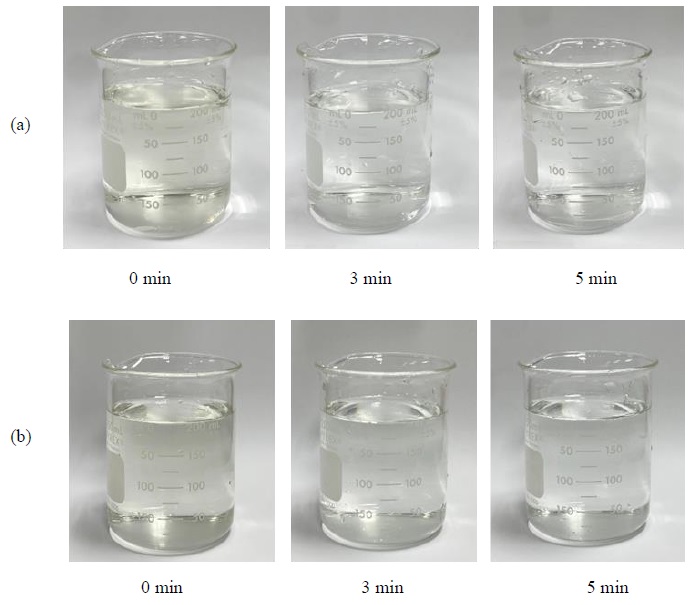
Color remaining in treated municipal wastewater can limit its acceptance for non-potable reuse. This study evaluated a simple UV/H2O2 step for decolorization of secondary effluent from three Bangkok Metropolitan Administration (BMA) wastewater treatment plants. Experiments were performed in a 0.75 L batch reactor equipped with a single low-pressure UV lamp (254 nm, 16 W); H2O2 doses of 33, 100, 167, and 333 mg/L were tested at ambient 25-30°C and unadjusted pH. Reaction times were 0-10 minutes with sampling at 0, 3, 5, and 10 min. Color (ADMI) decreased rapidly in the first minutes: >65% removal at 5 min for 100 mg/L H2O2, and a maximum of 76% at 10 min for 333 mg/L H2O2. Linearized kinetic fits showed that a pseudo-second-order model (R2≈0.953-0.966) described the data better than pseudo-first-order (R2≈0.909-0.921), indicating apparent bimolecular behavior under the tested conditions. A screening-level reagent cost based on commercial 50% w/w H2O2 pricing was 5.8 THB/m3 at 100 mg/L (≈0.179 USD/m3 using 32.4 THB: USD). These results demonstrate that a household-scale UV/H2O2 configuration can provide fast decolorization of municipal secondary effluent under short contact times, with a simple kinetic descriptor and an initial cost benchmark relevant to building-level non-potable reuse.
Article Details

This work is licensed under a Creative Commons Attribution-NonCommercial 4.0 International License.
Published articles are under the copyright of the Environment and Natural Resources Journal effective when the article is accepted for publication thus granting Environment and Natural Resources Journal all rights for the work so that both parties may be protected from the consequences of unauthorized use. Partially or totally publication of an article elsewhere is possible only after the consent from the editors.
References
Afonso-Olivares C, Fernández-Rodríguez C, Ojeda-González RJ, Sosa-Ferrera Z, Santana-Rodríguez JJ, Rodríguez JMD. Estimation of kinetic parameters and UV doses necessary to remove twenty-three pharmaceuticals from pre-treated urban wastewater by UV/H2O2. Journal of Photochemistry and Photobiology A: Chemistry 2016;329:130-8.
Barloková D, Ilavský J, Sedláková J, Matis A. Removal of Humic Substances from Water with Granular Activated Carbons. Engineering Proceedings; 2023.
Bangkok Master Plan (BMA). Bangkok State of the Environment Report 2022. Bangkok: Department of Environment, Bangkok Metropolitan Administration; 2022.
Cai QQ, Wu MY, Li R, Deng SH, Lee BCY, Ong SL, et al. Potential of combined advanced oxidation - Biological process for cost-effective organic matters removal in reverse osmosis concentrate produced from industrial wastewater reclamation: Screening of AOP pre-treatment technologies. Chemical Engineering Journal 2020;389:Article No. 123419.
Caretti C, Lubello C. Experimental study on colour removal from textile wastewaters using the H2O2/UV process with low- and medium-pressure lamps. Water Science and Technology: Water Supply 2010;10(4):Article No. 638.
Chiemchaisri C, Chiemchaisri W, Prasertkulsak S, Hamjinda NS, Kootatep T, Itonaga T, et al. Evaluation of treated sewage reuse potential and membrane-based water reuse technology for the Bangkok Metropolitan area. Water Science and Technology 2015;72(11):1954-61.
Clem V, Mendonça HV. Ozone reactor combined with ultrafiltration membrane: A new tertiary wastewater treatment system for reuse purpose. Journal of Environmental Management 2022;315:Article No. 115166.
Duckett D, Troldborg M, Hendry S, Cousin H. Making waves: Promoting municipal water reuse without a prevailing scarcity driver. Water Research 2024;249:Article No. 120965.
Echevarría C, Pastur M, Valderrama C, Cortina JL, Vega A, Mesa C, et al. Techno-economic assessment of decentralized polishing schemes for municipal water reclamation and reuse in the industrial sector in costal semiarid regions: The case of Barcelona (Spain). Science of the Total Environment 2022;815:Article No. 152842.
Institute for Environment and Sustainability. Water Reuse in Europe-Relevant Guidelines, Needs for and Barriers to Innovation. Luxembourg: Publications Office of the European Union; 2014.
International Organization for Standardization. ISO 16075-1:2020 Guidelines for Treated Wastewater Use for Irrigation Projects-Part 1: The basis of a reuse project for irrigation. Geneva: ISO; 2020.
Jennifer Z-A, Sonia A-D, Francesca E-B, Nadia F-M, Suanny M-R. Advanced oxidation processes by UV/H2O2 for the removal of anionic surfactants in a decentralized wastewater treatment plant in Ecuador. Water Science and Technology 2024;90(8):2340-51.
Kanchanapiya P, Tantisattayakul T. Wastewater reclamation trends in Thailand. Water Science and Technology 2022;86(11):2878-911.
Kim BJ, Choi J-Y, Lee H-J, Lee C. Elimination of DOC in RO concentrate from a wastewater reclamation plant: Cost comparison of different AOPs. Environmental Engineering Research 2023;28(4):Article No. 220598.
Kim I, Yamashita N, Tanaka H. Photodegradation of pharmaceuticals and personal care products during UV and UV/H2O2 treatments. Chemosphere 2009;77(4):518-25.
Knap-Bałdyga A, Żubrowska-Sudoł M. Natural organic matter removal in surface water treatment via coagulation—Current issues, potential solutions, and new findings. Sustainability 2023;15(18):Article No. 13853.
Kumari H, Sonia, Suman, Ranga R, Chahal S, Devi S, et al. A Review on Photocatalysis Used For Wastewater Treatment: Dye Degradation. Water, Air, and Soil Pollution 2023;234(6):Article No. 349.
Lhotský O, Krákorová E, Mašín P, Žebrák R, Linhartová L, Křesinová Z, et al. Pharmaceuticals, benzene, toluene and chlorobenzene removal from contaminated groundwater by combined UV/H2O2 photo-oxidation and aeration. Water Research 2017;120:245-55.
Luo Y, Guo W, Ngo HH, Nghiem LD, Hai FI, Zhang J, et al. A review on the occurrence of micropollutants in the aquatic environment and their fate and removal during wastewater treatment. Science of the Total Environment 2014;473-474:619-41.
Tchobanoglous G, Burton FL, Stensel HD. Wastewater Engineering: Treatment and Reuse. 4th ed. Boston McGraw-Hill; 2003.
Miguel EdSC, Machado BS, Teles APS, da Silva TF, Magalhães Filho FJC, Cavalheri PS. Optimizing sewage treatment by UV/H2O2 process and vertical flow constructed wetland integration. Journal of Water Process Engineering 2024;64:Article No. 105580.
Morrison CM, Hogard S, Pearce R, Mohan A, Pisarenko AN, Dickenson ERV, et al. Critical review on bromate formation during ozonation and control options for its minimization. Environmental Science and Technology 2023;57(47):18393-409.
Mukherjee J, Lodh BK, Sharma R, Mahata N, Shah MP, Mandal S, et al. Advanced oxidation process for the treatment of industrial wastewater: A review on strategies, mechanisms, bottlenecks and prospects. Chemosphere 2023;345:Article No. 140473.
Pamuła J, Karnas M, Paluch A, Styszko K. Comparative study on classical and modified UV/H2O2 and Fenton reaction based methods for the removal of chemical pollutants in water treatment. Desalination and Water Treatment 2022;275:92-102.
Papić S, Koprivanac N, Bozić AL, Vujević D, Dragicević SK, Kusić H, et al. Advanced oxidation processes in azo dye wastewater treatment. Water Environment Research 2006;78(6):572-9.
Park K-Y, Ahn K-H, Kim K-P, Kweon JH,Maeng S-K. Characteristics and treatability of persistent colors in biologically treated wastewater effluents. Environmental Engineering Science 2005;22(5):557-66.
Puspita P, Roddick FA, Porter NA. Decolourisation of secondary effluent by UV-mediated processes. Chemical Engineering Journal 2011;171(2):464-73.
Royal Gazette. Notification of the Ministry of Industry Re: Effluent Discharge Standards from Factories B.E. 2560. Volume 134. Bangkok, Thailand: Ministry of Industry; 2017 (in Thai).
Royal Gazette. Notification of the Ministry of Natural Resources and Environment Re: Effluent Discharge Standards for Certain Types and Sizes of Buildings B.E. 2535. Volume 135. Bangkok, Thailand: Ministry of Natural Resources and Environment; 2018 (in Thai).
Son C-Y, Kang J-K, Lee Y-J, Lee C-G, Kim J, Park S-J, et al. Degradation of residual dyes in actual textile wastewater using UV/H2O2: Evaluation of the impact of operating variables through multi-layer perceptron analysis. Environmental Engineering Research 2024;29(5):Article No. 230716.
Sugha A, Bhatti MS. Degradation of methylene blue dye by UV/H2O2 advanced oxidation process: Reaction kinetics, residual H2O2 and specific energy consumption evaluation. Desalination and Water Treatment 2022;274:297-307.
Thailand Metropolitan Waterworks Authority (MWA). Service-rate [Internet]. 2022 [cited 26 June 2025]. Available from: https://www.mwa.co.th/services/users-should-know/users-service-rate/service-rate/.
United States Environmental Protection Agency (USEPA). Method 110.1: Color by Spectrophotometry. L. National Exposure Research. Cincinnati, OH: U.S. Environmental Protection Agency; 1978.
United States Environmental Protection Agency (USEPA). REUSExplorer: Summary of Washington’s Water Reuse Guideline/Regulation for Centralized Non-Potable Reuse [Internet]. 2024 [cited 26 June 2025]. Available from: https://www.epa.gov/reuse/reusexplorer.
Yang K, Abu-Reesh IM, He Z. Domestic wastewater treatment towards reuse by “self-supplied” microbial electrochemical system assisted UV/H2O2 process. Water Research 2024;267:Article No. 122504.
Zawadzki P, Deska M. Degradation efficiency and kinetics analysis of an advanced oxidation process utilizing ozone, hydrogen peroxide and persulfate to degrade the dye Rhodamine B. Catalysts 2021;11(8):Article No. 974.
Zhang J, Li G, Yuan X, Li P, Yu Y, Yang W, et al. Reduction of ultrafiltration membrane fouling by the pretreatment removal of emerging pollutants: A review. Membranes (Basel) 2023;13(1):Aticle No. 77.
Ziembowicz S, Kida M. Limitations and future directions of application of the Fenton-like process in micropollutants degradation in water and wastewater treatment: A critical review. Chemosphere 2022;296:Article No. 134041.
