Biochemical Assessment of Oxidative Stress Markers in Rats Following Exposure to Spray and Scented Candle Air Fresheners 10.32526/ennrj/24/20250186
Article Sidebar
Main Article Content
Abstract
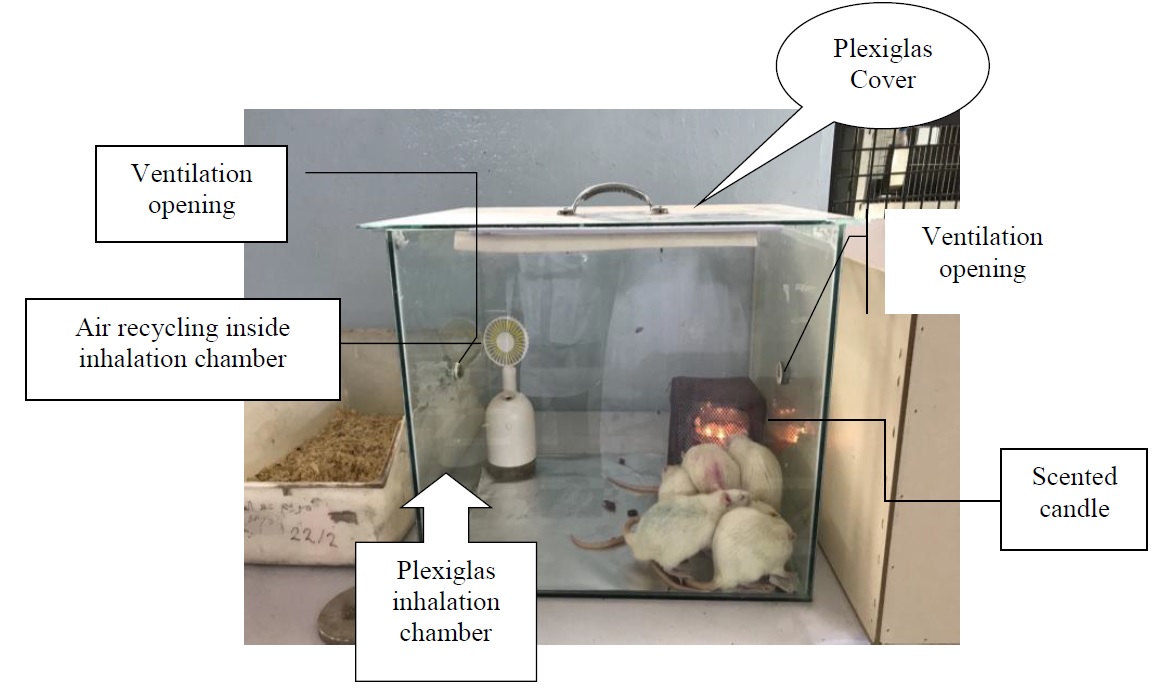
Air freshener and scented candles are widely used to improve indoor air quality or eliminate unpleasant odors, but these consumer products release volatile organic compound (VOCs), particulate matter, and other chemicals that can adversely affect public health. This study evaluated the effects of air freshener spray and scented candle using a locally manufactured inhalation exposure chamber in Baghdad. Effects in rats were assessed with particular focus on the oxidative stress. A total of (40) healthy Wistar male rats, weighing between (180-200) gm, were randomly divided into 4 groups, each group containing 10 rats. The first group was exposed to air freshener spray, the second group exposed to scented candles, the third group exposed to mixture of air freshener spray and scented candle and the fourth group exposed to fresh air only. The inhalation exposure periods were (10, 20, 30) days for each group. The total exposure time was one hour daily, while the exposure time to the substance itself was estimated to be 15 minutes. Blood samples were collected from each rat, and serum was separated for biochemical analysis. Oxidative stress biomarkers (SOD, GPX, and LPO) were measured using ELISA kits, while GSH was determined manually using the Ellman method. The results demonstrated that exposure to the air freshener led to significant increase in GPX levels, while GSH concentrations were notably reduced. Additionally, the activities of antioxidant enzymes SOD and LPO were elevated compared to the control group. These findings indicate that such emissions can disrupt redox balance and may have toxic effects.
Article Details

This work is licensed under a Creative Commons Attribution-NonCommercial 4.0 International License.
Published articles are under the copyright of the Environment and Natural Resources Journal effective when the article is accepted for publication thus granting Environment and Natural Resources Journal all rights for the work so that both parties may be protected from the consequences of unauthorized use. Partially or totally publication of an article elsewhere is possible only after the consent from the editors.
References
Abu Ghazal TS, Subih HS, Obeidat BS, Awawdeh MS. Hemp seed oil effects on female rats fed a high-fat diet and modulating adiponectin, leptin, and lipid profile. Agriculture 2023;13(2):1-9.
Adamowicz J, Juszczak K, Poletajew S, Van Breda SV, Pokrywczynska M, Drewa T. Scented candles as an unrecognized factor that increases the risk of bladder cancer; is there enough evidence to raise a red flag? Cancer Prevention Research 2019;12(10):645-52.
Afighor M, Ben-Azu B, Ajayi AM, Umukoro S. Role of cytochrome C and tumor necrosis factor-alpha in memory deficit induced by high doses of a commercial solid air freshener in mice. Journal of Chemical Health Risks 2019; 9(4):263-74.
Ahmed AK, Yenzeel JH. Determination of some oxidative stress parameters and antioxidants in sample of Iraqi beta thalassemia major patients. Iraqi Journal of Science 2017;58(1A):1-3.
Airaodion AI, Alabi OJ, Ogbuagu EO, Atiba FA, Olawoyin DS. Nephro and hepatotoxic effect of air-freshener in Wistar rats. Asian Journal of Research in Nephrology 2020b;3(2):1-9.
Airaodion AI, Ngwogu AC, Ekenjoku JA, Ngwogu KO. Hepatoprotective potency of ethanolic extract of Garcinia kola (Heckel) seed against acute ethanol-induced oxidative stress in Wistar rats. International Research Journal of Gastroenterology and Hepatology 2020c;3(1):42-51.
Airaodion AI, Ngwogu KO, Ngwogu AC. Common household insecticides used in Nigeria induced oxidative stress in Wistar rats. Asian Pacific Journal of Allergy and Immunology 2020d;3(1):84-90.
Airaodion AI, Ogbuagu EO, Atiba FA, Olawoyin DS, Alabi OJ. Frequent exposure to air-freshener reduces male fertility. Asian Research Journal of Gynaecology and Obstetrics 2020e;3(3):19-31.
Airaodion AI, Olawoyin DS, Alabi OJ, Atiba FA, Ogbuagu EO. Air freshener induced oxidative stress and its adverse effects on immunity. International Journal of Health, Safety and Environment 2020a;6(05):579-87.
Al-Badry SH, Ibrahim NG, AlMashhadani HA, Kadhim MM. The role of oxidative stress in patients with chronic kidney disease. Wiadomosci Lekarskie Medical Advances 2023;76(5 p. 1):951-5.
Al-Easawi NA. The Effect of Exposure to Shisha Smoke and Cigarette in Some Vital Organs of Male Mice [dissertation]. Baghdad: Collage of Science, University of Baghdad; 2015.
Alfahdawi OA, Alfahdawi AA, Mohammed IM. Effects of aqueous extract of cumin seed (Cuminum cyminum) on the structure and function of albino rat kidneys treated with dibutyl phthalate. Iraqi Journal of Science 2023;64(5):2168-77.
Banks WA, Rhea EM. The blood-brain barrier, oxidative stress, and insulin resistance. Antioxidants 2021;10(11):1-14.
Cheek E, Guercio V, Shrubsole C, Dimitroulopoulou S. Portable air purification: Review of impacts on indoor air quality and health. Science of the Total Environment 2021;766:Article No. 142585.
Choi YH, Kim HJ, Sohn JR, Seo JH. Occupational exposure to VOCs and carbonyl compounds in beauty salons and associated health risks in South Korea. Ecotoxicology and Environmental Safety 2023;256:Article No. 114873.
Cincinelli A, Martellini T. Indoor air quality and health. International Journal of Environmental Research and Public Health 2017;14(11):1-5.
Cocârţă DM, Prodana M, Demetrescu I, Lungu PE, Didilescu AC. Indoor air pollution with fine particles and implications for workers’ health in dental offices: A brief review. Sustainability 2021;13(2):1-17.
Ellman GL. Tissue sulfhydryl groups. Archives of Biochemistry and Biophysics 1959;82(1):70-7.
Fakhri YA, Al-Ani AW. Association of superoxide dismutase with ticagrelor treatment in patients with peripheral arterial disease. Iraqi Journal of Science 2025;66(5);1812-23.
Gabriel-Brisibe CU, Odinga T, Wokocha PG, Agara HN, Adinde TC. Exposure to air freshner and its distresses on the antioxidant biomarkers of male Wistar rats. Journal of Toxicology and Environmental Health Sciences 2020; 12(3):22-6.
Goodman N, Nematollahi N, Agosti G, Steinemann A. Evaluating air quality with and without air fresheners. Air Quality, Atmosphere and Health 2020;13(1):1-4.
Hammod NM, Al-Janabi KWS, Hasan SA. Determination of some volatile organic compounds in the water produced at Al-Ahdab oilfield using headspace SPE-GC-FID. Indian Journal of Forensic Medicine and Toxicology 2020;14(1):994-9.
Hellou J, Ross NW, Moon TW. Glutathione, glutathione S-transferase, and glutathione conjugates, complementary markers of oxidative stress in aquatic biota. Environmental Science and Pollution Research 2012;19(6):2007-23.
Khalid FK, Rabee AM. Association of traffic-related air pollution with DNA damage and some other biological parameters among minibuses drivers in Baghdad City. Iraqi Journal of Science 2025;66(4):1478-85.
Kim S, Lee AY, Cho MH. Inhaled exposure to air fresheners aggravated liver injury in a murine model of nonalcoholic fatty acid liver disease. Heliyon 2021;7(3):1-7.
Li Z, Liu Q, Xu Z, Guo X, Wu S. Association between short-term exposure to ambient particulate air pollution and biomarkers of oxidative stress: A meta-analysis. Environmental Research 2020;191:Article No. 110105.
Lodovici M, Bigagli E. Oxidative stress and air pollution exposure. Journal of Toxicology 2011;2011(1):1-9.
Oyenihi OR, Afolabi BA, Oyenihi AB, Ogunmokun OJ, Oguntibeju OO. Hepato-and neuro-protective effects of watermelon juice on acute ethanol-induced oxidative stress in rats. Toxicology Reports 2016;3:288-94.
Seguel JM, Merrill R, Seguel D, Campagna AC. Indoor air quality. American Journal of Lifestyle Medicine 2017;11(4):284-95.
Seo JH, Kim PG, Choi YH, Shin W, Sochichiu S, Khoshakhlagh AH, et al. Evaluation of personal exposure to volatile organic chemicals (VOCs) in small-scale dry-cleaning facilities using passive sampling. Atmospheric Environment 2025;353: Article No. 121235.
Singh A, Kumari A, Fatima L. Beyond aromatherapy: Illuminating the underappreciated risks associated with scented candle exposure. Environmental Science and Technology 2023;57(41):15299-300.
Statistical Packages for the Social Sciences (SPSS). SPSS/IBM Statistics, Version 26 Step by Step. 16th ed. SPSS; 2019.
Wang F, Li C, Liu W, Jin Y. Oxidative damage and genotoxic effect in mice caused by sub-chronic exposure to low-dose volatile organic compounds. Inhalation Toxicology 2013; 25(5):235-42.
World Health Organization (WHO). Principles and Methods of Evaluating the Toxicity of Chemicals. Part 1. Environmental Health Criteria 6. Geneva: World Health Organization; 1978.
Yakasai AU, Mohammed B. Biochemical effects of gel and liquid air fresheners sold in Kano on Swiss albino rats (Rattus norvegicus). Bayero Journal of Pure and Applied Sciences 2022;13(1):554-9.
Yang W, Li J, Hekimi S. A measurable increase in oxidative damage due to reduction in superoxide detoxification fails to shorten the life span of long-lived mitochondrial mutants of Caenorhabditis elegans. Genetics 2007;177(4):2063-74.
Yun H, Seo JH, Kim YG, Yang J. Impact of scented candle use on indoor air quality and airborne microbiome. Scientific Reports 2025;15(1):1-10.
