Announcements

ISJET Introduces DOI for Published Articles

2026-10-07

The International Scientific Journal of Engineering and Technology (ISJET) is pleased to announce the adoption of the Digital Object Identifier (DOI) system through Crossref for its published articles.

Starting with Volume 10, Issue 2 (July–December 2026), each published article will be assigned a unique and permanent DOI to enhance the discoverability, accessibility, citation, and long-term identification of scholarly content.

The adoption of DOI represents ISJET’s continued commitment to international publishing standards, research visibility, and high-quality scholarly communication.

The journal recommends that authors, researchers, and readers use the DOI when citing articles that have one, as this facilitates accurate and efficient linking and citation tracking.

AI Policy

2026-10-07

This document serves as the guideline for the preparation of original articles for publication in the International Scientific Journal of Engineering and Technology (ISJET). The guidelines shall be effective for all manuscripts submitted from November 1, 2026, onward.

For Authors

1. Authors may use AI as a tool to support manuscript preparation, including grammar checking, language refinement, or preliminary data synthesis. However, AI cannot be recognized as an author or serve as a substitute for authorial responsibility. This is to ensure that the published articles contribute original knowledge, scholarly value, and academic integrity.

2. Authors are fully responsible for the accuracy, completeness, and academic integrity of all content submitted for publication. When AI is used to generate, analyze, or otherwise contribute to any part of the manuscript, authors must ensure that the content is original, complies with copyright or ethical standards, and is appropriately acknowledged and cited where applicable.

Ultimately, authors are responsible and accountable for the contents of their work.

3. Authors must fully, clearly, and transparently disclose any use of AI, including for data analysis and the generation of text, tables, or images. Details of such use must be provided in the Declaration of AI Use section of the article.

Declaration of Generative AI and AI-Assisted Technologies in the Manuscript Preparation Process

During the preparation of this work, the author(s) used [NAME OF TOOL/SERVICE] in order to [REASON/PURPOSE]. After using this tool/service, the author(s) reviewed and edited the content as needed and take(s) full responsibility for the content of the published article.

4. Authors may use AI-assisted tools for plagiarism detection, reference management, grammar checking, or language editing without specific disclosure, provided that such use does not contribute to or alter the substantive intellectual content of the article.

 For Reviewers

1. Reviewers must not upload, input, or submit the entirety or any portion of the manuscript to an AI system, as it may compromise author confidentiality, intellectual property, and personal data protection rights.

2. Reviewers should not use AI to analyze or formulate the evaluation outcomes, as the peer-review process requires independent human judgment, critical analysis, and scholarly expertise.

3. Reviewers can use AI-assisted tools for grammar checking and language refinement, without affecting the reviewer’s independent assessment of the manuscript’s scholarly content.

For Editors

1. Editors must not upload, input, or submit the entirety or any portion of the manuscript to an AI system, as it may compromise author confidentiality, intellectual property, and personal data protection rights. An exception may be made for the use of approved tools designed solely to detect or verify AI-generated content.

2. Editors should establish appropriate tools or guidelines for identifying the use of AI in manuscript preparation, particularly when content exhibits characteristics commonly associated with AI-generated material. Such characteristics may include synthesized content lacking adequate references, the use of automatically generated images, unnatural language patterns, or other indicators of AI-assisted content creation.

3. Editors may use AI-assisted tools for manuscript management, including grammar checking, technical and administrative document processing, and reference verification. However, this must not influence editorial discretion, decision-making, or academic judgment, which remain the sole responsibilities of the editor.

Guidelines for Reviewing AI-Generated Articles

1. The journal will not consider for review or publication any manuscript in which AI has been used to generate the primary intellectual content or the entirety of the manuscript.

2. The journal reserves the right to reject the manuscript if the authors fail to fully disclose the use of AI or decline to assume full responsibility for the content submitted for publication.

3. Authors may appeal decisions concerning the use of AI by submitting a formal request supported by clear and verifiable evidence for consideration by the Editor-in-Chief and the Editorial Board. If the justification is deemed valid and sufficient, the decision may be reconsidered. However, the final decision of the Editorial Board shall be binding.

4. If a published article is subsequently found to be in violation of the journal’s AI use policy, the journal reserves the right to retract the article and remove it from the journal's website in accordance with its publication ethics and retraction procedures.

References: The COPE Council (https://doi.org/10.24318/cCVRZBms) and The World Association of Medical Editors (https://wame.org/page3.php?id=106) (Updated on October 1, 2026)

 

Announcement of Changes in Publication Frequency and Number of Articles

2026-07-08

The Editorial Board of the International Scientific Journal of Engineering and Technology (ISJET) would like to inform all authors, reviewers, and readers of the following changes to the journal’s publication policy:

1. Number of Issues per Year

Previously, the journal was published in two issues per year:

* Issue No. 1: January–June
* Issue No. 2: July–December

Beginning in 2027, the journal will be published in three issues per year:

* Issue No. 1: January–April
* Issue No. 2: May–August
* Issue No. 3: September–December

2. Number of Research and Academic Articles

Previously, each issue contained 10 research or academic articles.

The number of research or academic articles will be revised to 8 articles per issue.

These changes will take effect on January 1, 2027.

We warmly invite researchers, academics, and professionals worldwide to submit their original manuscripts for consideration. We welcome original research articles and academic articles covering topics within the journal’s scope. We also welcome qualified scholars and experts to serve as peer reviewers and help maintain the journal’s quality and academic standards.

We look forward to receiving your valuable contributions and continuing to provide a high-quality platform for disseminating scientific and technological research.

Announcement on the Appointment of Two Peer Reviewers for Article Evaluation

2026-02-11

Effective from February 11, 2026 onward, the INTERNATIONAL SCIENTIFIC JOURNAL OF ENGINEERING AND TECHNOLOGY (ISJET) will implement a policy requiring two peer reviewers for the evaluation of all submitted manuscripts, in accordance with the OCSC Regulation on Criteria and Procedures for the Appointment of Academic Positions (No. 3), B.E. 2568 (2025).

The key provisions are as follows: “In the case of publishing research or academic articles in national academic journals, the articles must be published in journals indexed in the Thai-Journal Citation Index (TCI) database. For appointment to the rank of Assistant Professor, the publication must appear in a journal listed in TCI Tier 1 or Tier 2. For appointment to the rank of Associate Professor, the publication must appear in a journal listed in TCI Tier 1. For applications for academic positions in the fields of Social Sciences and Humanities, publications must appear in journals indexed in the TCI database. For the ranks of Assistant Professor and Associate Professor, publications must appear in TCI Tier 1 or Tier 2. For the rank of Professor, publications must appear in TCI Tier 1.”

This announcement is made in reference to the criteria of the Thai-Journal Citation Index Centre (TCI), which requires that academic journals conduct peer review by at least two qualified reviewers.

This is hereby announced for general acknowledgment.

Article Processing Charge:

2026-01-15

The author is required to pay a publication fee of 4,000 Thai Baht for each published article. This fee is due after the initial review process by the editorial team. This announcement is effective on January 1, 2026 **The institute reserves the right to refund the article publication fee in all cases. **

Publication Ethics

2023-03-17

Publication Ethics Roles and Duty of the Author   1. The author must have knowledge and understanding on the standards of research articles and produce quality research articles.
2. The main author and co-author must sign in the certifying letter before publishing their article in the journal to declare that their article has never been published in any journal before, and is not in the process of consideration for publication in any journal or other dissemination sources.
3. The authors must not plagiarize or violate the copy right of the others.If they include the other’s academic work in their article, they must make proper footnote or referencing in accordance with the pre-determined format.
4. The author must report the actual research data, without data distortion or presenting of false data.
5. The authors whose names appear in the article must actually participate in the research activities.
6. The authors must prepare their manuscripts in accordance with the instructions for manuscript preparation that appear in the journal.
7. The authors must revise their articles according to recommendations from peer reviewers and the editorial board.
8. The authors who disseminate information from other work agencies must have been granted permission from that work agency to disseminate the information.
9. Any research study conducted with human beings should have a certifying letter from the Committee on Human Research Ethics.
 
Roles and Duty of the Editor
1. The editor must create and publish the journal based on the predetermined policy and directions.
2. The editor must seriously peruse and select articles for publication in the journal with the goal to have high quality articles that are beneficial to the readers.
3. After the articles have gone through the evaluation process by the experts or peer reviewers, the editor must select them for publication based on their significance, contribution to expanding the body of knowledge, clarity, and coherence of the contents.
4. The editor must seriously check against plagiarizing with the use of reliable checking programs.
5. The editor must halt the evaluation of any article that has been found to plagiarize the work of the others, and must reject the publication of that article.
6. The editor must not share any interest with the author, the peer reviewers, and the executive team.
7. The editor must not reveal the information of the author and peer reviewers to unconcerned persons.
 
Roles and Duty of the Peer Reviewers
1. The peer reviewers must be honest to their profession, have no bias or prejudice, give their straightforward opinions, and be constructive leading to improvement of the articles to meet academic standards.
2. The peer reviewers must evaluate only the articles in which they have expertise by consideration of quality of the articles and refraining from using their own opinions that have no supporting evidence in giving recommendations or making decisions on the articles.
3. The peer reviewers must provide recommendations and cite examples of important research works relevant to the evaluated article that the author fails to mention.
4. If the peer reviewers realize that they may have overlapping interests with the author, the peer reviewers must inform the journal’s editor and decline to evaluate that particular article.
5. If the peer reviewers find that the article under review has contents duplicating those of another article, they must inform the journal’s editor.
6. The peer reviewers must not reveal the information of the articles submitted for publication during the article evaluation interval.


Public Relations

2022-09-07

The Committee of Civil Servants in Higher Education Institutions’ Fourth Announcement on the Criteria and Methods of Consideration for the Persons to Be Appointed as Assistant Professors, Associate Professors, and Professors stipulates that “The academic work outcomes must have been published in quality academic journals after having passed the double-blinded peer reviews from at least three outside experts from various higher education institutions;

In order to comply with the above announcement, Panyapiwat Journal would like to inform you about the change in its operation as follows:

In order for the received manuscript to be published, it must have passed double-blind peer reviews by at least three experts in the relevant discipline from various institutions, the details of which are shown in the Editorial Board Policy.
This announcement is effective on October 1, 2021

Publication of the Panyapiwat Institute of Academic Journals

2022-09-07

Publication of the Interesting Articles


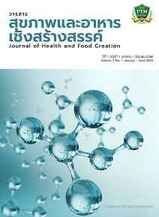
-2.jpg

Journal of Health and Food Creation (New Journal)

Journal of Health and Food Creation is a journal in all fields of Nursing and Health Science, Health Service system, Health Information Management, Food and Service, Medical and Food Biotechnology, Food Science and Technology, Nutrition, Innovation in Health and Food, and Other related fields.

วารสารด้านด้านการพยาบาลและ วิทยาศาสตร์และเทคโนโลยีการอาหาร

โทรศัพท์: 02 855 0908  อีเมล: jhfc@pim.ac.th

https://he03.tci-thaijo.org/index.php/JHFC/index


pim-4-d6293300f3dd888a23b78e7ab0edc8d9.jpg

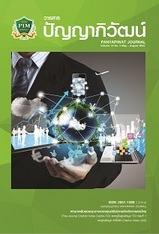
Panyapiwat Journal

Journals in Humanities and Social Sciences Indexed in the Thai-Journal Citation Index (TCI 1)

Tel. (+66) 2855 0908, (+66) 2855 1102 E-mail: journal@pim.ac.th

https://so05.tci-thaijo.org/index.php/pimjournal


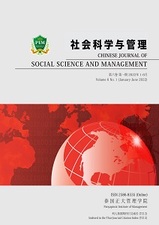
cjssm-ba06d5011651dd3c1494874cb9979044.jpg

Chinese Journal of Social Science and Management (CJSSM) 

Journals in Humanities and Social Sciences Indexed in the Thai-Journal Citation Index (TCI 2)

Tel. (+66) 0 855 1048 E-mail: cjssm@pim.ac.th

https://www.tci-thaijo.org/index.php/CJSSM/index


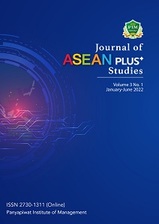
asean.jpg

Journal of ASEAN PLUS+ Studies

Journals in Humanities and Social Sciences 

Tel. (66) +2855 1560  E-mail: aseanplus@pim.ac.th

https://so06.tci-thaijo.org/index.php/aseanplus/index