
Phenotypic-Genotypic Characterization of Macrolide-Lincosamide-Streptogramin B Resistance in Staphylococcus saprophyticus UTI Isolates from Iraq
Article Sidebar
Main Article Content
Abstract
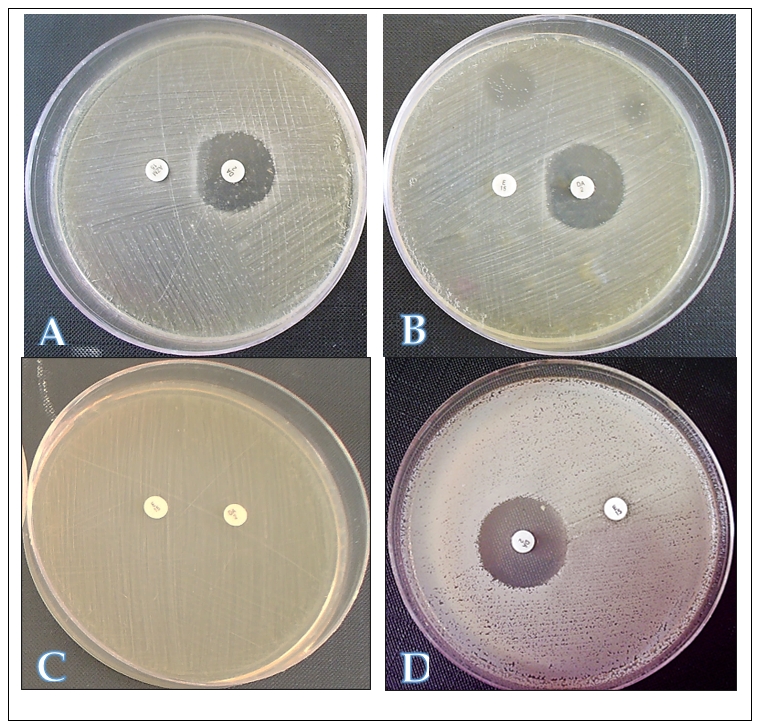
Staphylococcus saprophyticus is a significant uropathogen, particularly in young women. Rising macrolide-lincosamide-streptogramin B (MLSB) resistance poses therapeutic challenges. This study characterized phenotypic and genotypic MLSB resistance patterns among S. saprophyticus UTI isolates in Najaf, Iraq. Forty-two S. saprophyticus isolates were collected from urine samples (February-April 2025) from patients aged 1-70 years. Phenotypic resistance was assessed using the D-test methodology following CLSI guidelines. PCR amplification targeted eight resistance genes: erm(C) and msr(A). Isolates predominantly originated from females (28/42, 66.7%), with the highest frequency in age groups 21-30 (11/42, 26.2%) and 31-40 years (10/42, 23.8%). The D-test revealed that 25/42 (59.5%) isolates exhibited MLSB resistance: 9/42 (21.4%) demonstrated an inducible MLSB (iMLSB) phenotype, 16/42 (38.1%) exhibited a constitutive MLSB (cMLSB) phenotype, and 8/42 (19.0%) displayed a macrolide-streptogramin B (MS) phenotype, while 9/42 (21.4%) were MLSB-negative. Molecular analysis detected resistance genes in only 9 of 25 (36%) phenotypically MLSB-positive isolates. The erm(C) gene alone was present in 2/25 (8%) isolates, while erm(C)+msr(A) combination dominated at 7/25 (28%). High MLSB resistance prevalence (59.5%) among S. saprophyticus isolates, with cMLSB predominance and significant genotype-phenotype discordance (64% phenotypically positive lacking detected genes), emphasizes the necessity for routine D-testing and expanded molecular surveillance to guide antimicrobial therapy in Iraqi healthcare settings.
Article Details

This work is licensed under a Creative Commons Attribution-NonCommercial-NoDerivatives 4.0 International License.
References
Hashemzadeh, M.; Dezfuli, A.A.Z.; Nashibi, R.; Jahangirimehr, F.; Akbarian, Z.A. Study of biofilm formation, structure and antibiotic resistance in Staphylococcus saprophyticus strains causing urinary tract infection in women in Ahvaz, Iran. New Microbes New Infect. 2020, 39, 100831. https://doi.org/10.1016/j.nmni.2020.100831
Lawal, O.U.; Barata, M.; Fraqueza, M.J.; Worning, P.; Bartels, M.D.; Goncalves, L.; Miragaia, M. Staphylococcus saprophyticus from clinical and environmental origins have distinct biofilm composition. Front. Microbiol. 2021, 12, 663768. https://doi.org/10.3389/fmicb.2021.663768
Al-Shamarti, M.J. Activity assessment of antibiotics used against different bacterial etiological agents of UTI in Najaf, Iraq. Iran. J. Pathol. 2024, 19(3), 348–354. https://doi.org/10.30699/ijp.2024.2027209.3293
Hussein, N.R.; Hameed, M.A.; Resho, Q.N. The trends of Staphylococcus aureus antibiotics resistance in Iraq: A narrative review. BioMed Target J. 2024, 2(2), 21–30. https://doi.org/10.59786/bmtj.222
Sedaghat, H.; Esfahani, B.N.; Mobasherizadeh, S.; Jazi, A.S.; Halaji, M.; Sadeghi, P.; Emaneini, M.; Havaei, S.A. Phenotypic and genotypic characterization of macrolide resistance among Staphylococcus aureus isolates in Isfahan, Iran. Iran. J. Microbiol. 2017, 9(5), 264–270.
Le Bouter, A.; Leclercq, R.; Cattoir, V. Molecular basis of resistance to macrolides, lincosamides and streptogramins in Staphylococcus saprophyticus clinical isolates. Int. J. Antimicrob. Agents 2011, 37(2), 118–123. https://doi.org/10.1016/j.ijantimicag.2010.10.008
Miklasińska-Majdanik, M. Mechanisms of resistance to macrolide antibiotics among Staphylococcus aureus. Antibiotics 2021, 10(11), 1406. https://doi.org/10.3390/antibiotics10111406
Steward, C.D.; Raney, P.M.; Morrell, A.K.; Williams, P.P.; McDougal, L.K.; Jevitt, L.; McGowan, J.E.; Tenover, F.C. Testing for induction of clindamycin resistance in erythromycin-resistant isolates of Staphylococcus aureus. J. Clin. Microbiol. 2005, 43(4), 1716–1721. https://doi.org/10.1128/JCM.43.4.1716-1721.2005
Perez, L.R.R.; Caierão, J.; Antunes, A.L.S.; d'Azevedo, P.A. Use of the D test method to detect inducible clindamycin resistance in coagulase-negative staphylococci (CoNS). Braz. J. Infect. Dis. 2007, 11(2), 186–188. https://doi.org/10.1590/S1413-86702007000200002
Prabhu, K.; Rao, S.; Rao, V. Inducible clindamycin resistance in Staphylococcus aureus isolated from clinical samples. J. Lab. Physicians 2011, 3(1), 25–27. https://doi.org/10.4103/0974-2727.78558
Ojha, A.; Maheshwari, R.K. Phenotypic detection of inducible clindamycin resistance by D-test in staphylococci from various clinical samples. Front. Microbiol. 2025, 16, 1569242.
Perez, L.R.R.; Caierão, J.; Antunes, A.L.S.; d'Azevedo, P.A. Use of the D test method to detect inducible clindamycin resistance in coagulase-negative staphylococci (CoNS). Braz. J. Infect. Dis. 2007, 11(2), 186–188. https://doi.org/10.1590/S1413-86702007000200002
Apidianakis, Y.; Pitsouli, C.; Perrimon, N.; Rahme, L. Synergy between bacterial infection and genetic predisposition in intestinal dysplasia. Proc. Natl. Acad. Sci. USA 2005, 102(35), 12596–12601.
Rafiee, M.; Tabarraei, A.; Yazdi, M.; Mohebbi, A.; Ghaemi, E.A. Antimicrobial resistance patterns of Staphylococcus saprophyticus isolates causing urinary tract infections in Gorgan, North of Iran. Med. Lab. J. 2023, 17(2), 33–38. https://doi.org/10.61186/mlj.17.2.33
Mahfouz, A.A.; Said, H.S.; Elfeky, S.M.; Shaaban, M.I. Inhibition of erythromycin and erythromycin-induced resistance among Staphylococcus aureus clinical isolates. Antibiotics 2023, 12(3), 503. https://doi.org/10.3390/antibiotics12030503
Addis, Z.; Aschale, Y.; Fenta, A.; Teffera, Z.H.; Melkamu, A.; Tigab, A.; Dilnessa, T. Methicillin and inducible clindamycin resistance in clinical Staphylococcus aureus isolates: A cross-sectional study from Northwest Ethiopia. Front. Microbiol. 2025, 16, 1569242. https://doi.org/10.3389/fmicb.2025.1569242
Pardo, L.; Machado, V.; Cuello, D.; Aguerrebere, P.; Seija, V.; Braga, V.; Varela, G. Macrolide-lincosamide-streptogramin B resistance phenotypes and their associated genotypes in Staphylococcus aureus isolates from a tertiary level public hospital of Uruguay. Rev. Argent. Microbiol. 2020, 52(3), 202–210. https://doi.org/10.1016/j.ram.2019.10.004
Saderi, H.; Emadi, B.; Owlia, P. Phenotypic and genotypic study of macrolide, lincosamide and streptogramin B (MLSB) resistance in clinical isolates of Staphylococcus aureus in Tehran, Iran. Med. Sci. Monit. 2011, 17(2), BR48–BR53. https://doi.org/10.12659/MSM.881386
Zmantar, T.; Kouidhi, B.; Miladi, H.; Bakhrouf, A. Detection of macrolide and disinfectant resistance genes in clinical Staphylococcus aureus and coagulase-negative staphylococci. BMC Res. Notes 2011, 4(1), 453. https://doi.org/10.1186/1756-0500-4-453
Rafiee, M.; Tabarraei, A.; Yazdi, M.; Mohebbi, A.; Ghaemi, E.A. Antimicrobial resistance patterns of Staphylococcus saprophyticus isolates causing UTIs in Gorgan, North of Iran. Med. Lab. J. 2023, 17(2), 33–38. https://doi.org/10.61186/mlj.17.2.33
Murdandy, A.H.; Al-Saadi, M.A.; Al-Charrakh, A.H. Antibiotic susceptibility patterns of Staphylococcus saprophyticus isolated from Iraqi patients. J. Med. Microbiol. 2003, 52(8), 693–696.
Sumriddetchkajorn, K.; Suwannapong, K.; Soonthornchareonnon, N.; Chansiripornchai, N. Antimicrobial resistance patterns of Staphylococcus species isolated from clinical specimens in Iraq. Asian Pac. J. Trop. Med. 2024, 17(4), 165–172.
McFadden, J.F. Biochemical Tests for Identification of Medical Bacteria, 3rd ed.; Lippincott Williams & Wilkins: Philadelphia, PA, USA, 2000.
Clinical and Laboratory Standards Institute (CLSI). Performance Standards for Antimicrobial Susceptibility Testing, 34th ed.; CLSI Document M100; Clinical and Laboratory Standards Institute: Wayne, PA, USA, 2024.
Majhi, S.; Dash, M.; Mohapatra, D.; Mohapatra, A.; Chayani, N. Detection of inducible and constitutive clindamycin resistance among Staphylococcus aureus isolates in a tertiary care hospital, Eastern India. Avicenna J. Med. 2016, 6(3), 75–80. https://doi.org/10.4103/2231-0770.184066
Martineau, F.; Picard, F.J.; Lansac, N.; Ménard, C.; Roy, P.H.; Ouellette, M.; Michel, G. Correlation between the resistance genotype determined by multiplex PCR assays and the antibiotic susceptibility patterns of Staphylococcus aureus and Staphylococcus epidermidis. Antimicrob. Agents Chemother. 2000, 44(2), 231–238. https://doi.org/10.1128/AAC.44.2.231-238.2000
Lina, G.; Quaglia, A.; Reverdy, M.E.; Leclercq, R.; Vandenesch, F.; Etienne, J. Distribution of genes encoding resistance to macrolides, lincosamides, and streptogramins among staphylococci. Antimicrob. Agents Chemother. 1999, 43(5), 1062–1066. https://doi.org/10.1128/AAC.43.5.1062
Hashemzadeh, M.; Dezfuli, A.A.Z.; Nashibi, R.; Jahangirimehr, F.; Akbarian, Z.A. Study of biofilm formation, structure and antibiotic resistance in Staphylococcus saprophyticus strains causing urinary tract infection in women in Ahvaz, Iran. New Microbes New Infect. 2020, 39, 100831. https://doi.org/10.1016/j.nmni.2020.100831
Lawal, O.U.; Barata, M.; Fraqueza, M.J.; Worning, P.; Bartels, M.D.; Goncalves, L.; Miragaia, M. Staphylococcus saprophyticus from clinical and environmental origins have distinct biofilm composition. Front. Microbiol. 2021, 12, 663768. https://doi.org/10.3389/fmicb.2021.663768
Faiq, M.K. Antibiotic resistance in bacterial species: A retrospective study of cultures in Kirkuk City, Iraq. Tikrit J. Pharm. Sci. 2025, 19(1), 18–29. https://doi.org/10.25130/tjphs.2025.19.1.2.18.29
Rafiee, M.; Tabarraei, A.; Yazdi, M.; Mohebbi, A.; Ghaemi, E.A. Antimicrobial resistance patterns of Staphylococcus saprophyticus isolates causing urinary tract infections in Gorgan, North of Iran. Med. Lab. J. 2023, 17(2), 33–38. https://doi.org/10.61186/mlj.17.2.33
Salman, M.S. Antibiotic resistance of bacteria isolated in urinary tract infections. J. Contemp. Med. Sci. 2024, 10(2), 163–166. https://doi.org/10.22317/jcms.v10i2.1385
Sedaghat, H.; Esfahani, B.N.; Mobasherizadeh, S.; Jazi, A.S.; Halaji, M.; Sadeghi, P.; Emaneini, M.; Havaei, S.A. Phenotypic and genotypic characterization of macrolide resistance among Staphylococcus aureus isolates in Isfahan, Iran. Iran. J. Microbiol. 2017, 9(5), 264–270.
Miklasińska-Majdanik, M. Mechanisms of resistance to macrolide antibiotics among Staphylococcus aureus. Antibiotics 2021, 10(11), 1406. https://doi.org/10.3390/antibiotics10111406
Lina, G.; Quaglia, A.; Reverdy, M.E.; Leclercq, R.; Vandenesch, F.; Etienne, J. Distribution of genes encoding resistance to macrolides, lincosamides, and streptogramins among staphylococci. Antimicrob. Agents Chemother. 1999, 43(5), 1062–1066. https://doi.org/10.1128/AAC.43.5.1062
Le Bouter, A.; Leclercq, R.; Cattoir, V. Molecular basis of resistance to macrolides, lincosamides and streptogramins in Staphylococcus saprophyticus clinical isolates. Int. J. Antimicrob. Agents 2011, 37(2), 118–123. https://doi.org/10.1016/j.ijantimicag.2010.10.008
Prabhu, K.; Rao, S.; Rao, V. Inducible clindamycin resistance in Staphylococcus aureus isolated from clinical samples. J. Lab. Physicians 2011, 3(1), 25–27. https://doi.org/10.4103/0974-2727.78558
Sande, S.V. Phenotypic detection and incidence of inducible clindamycin resistance among Staphylococcus aureus from a tertiary care hospital. Int. J. Adv. Med. 2015, 2(3), 264–268. https://doi.org/10.18203/2349-3933.ijam20150557
Montanari, M.P.; Mingoia, M.; Giovanetti, E.; Varaldo, P.E. Differentiation of resistance phenotypes among erythromycin-resistant pneumococci. J. Clin. Microbiol. 2001, 39(4), 1311–1315. https://doi.org/10.1128/JCM.39.4.1311-1315.2001
Adwan, G.; Adwan, K.; Jarrar, N.; Amleh, A. Molecular detection of nine antibiotic resistance genes in methicillin resistant Staphylococcus aureus isolates. Rom. Arch. Microbiol. Immunol. 2014, 73(1–2), 9–18.
Ghanbari, F.; Ghajavand, H.; Havaei, R.; Jami, M.S.; Khademi, F.; Heydari, L.; Shahin, M.; Havaei, S.A. Distribution of erm genes among Staphylococcus aureus isolates with inducible resistance to clindamycin in Isfahan, Iran. Adv. Biomed. Res. 2016, 5, 62. https://doi.org/10.4103/2277-9175.179184
Ojo, K.K.; Striplin, M.J.; Ulep, C.C.; Close, N.S.; Zittle, J.; Luis, H.; Bernardo, M.; Leitao, J.; Roberts, M.C. Staphylococcus efflux msr(A) gene characterized in Streptococcus, Enterococcus, Corynebacterium, and Pseudomonas isolates. Antimicrob. Agents Chemother. 2006, 50(3), 1089–1091. https://doi.org/10.1128/AAC.50.3.1089-1091.2006
Reynolds, E.; Ross, J.I.; Cove, J.H. Msr(A) and related macrolide/streptogramin resistance determinants: Incomplete transporters? Int. J. Antimicrob. Agents 2003, 22(3), 228–236. https://doi.org/10.1016/S0924-8579(03)00218-8
Navidifar, T.; Zare Banadkouki, A.; Parvizi, E.; Mofid, M.; Golab, N.; Beig, M.; Sholeh, M. Global prevalence of macrolide-resistant Staphylococcus spp.: A comprehensive systematic review and meta-analysis. Front. Microbiol. 2025, 16, 1524452. https://doi.org/10.3389/fmicb.2025.1524452
Steward, C.D.; Raney, P.M.; Morrell, A.K.; Williams, P.P.; McDougal, L.K.; Jevitt, L.; McGowan, J.E.; Tenover, F.C. Testing for induction of clindamycin resistance in erythromycin-resistant isolates of Staphylococcus aureus. J. Clin. Microbiol. 2005, 43(4), 1716–1721. https://doi.org/10.1128/JCM.43.4.1716-1721.2005
Hassan, O.M. Molecular detection of MSRA erythromycin-resistant gene in Staphylococcus spp. J. Fac. Med. Baghdad 2017, 59(1), 90–92. https://doi.org/10.32007/med.1936/jfacmedbagdad.v59i1.19
Perez, L.R.R.; Caierão, J.; Antunes, A.L.S.; d'Azevedo, P.A. Use of the D test method to detect inducible clindamycin resistance in coagulase-negative staphylococci (CoNS). Braz. J. Infect. Dis. 2007, 11(2), 186–188. https://doi.org/10.1590/S1413-86702007000200002
Schwendener, S.; Donà, V.; Perreten, V. The novel macrolide resistance genes mef(D), msr(F), and msr(H) are present on resistance islands in Macrococcus canis, Macrococcus caseolyticus, and Staphylococcus aureus. Antimicrob. Agents Chemother. 2020, 64(5), e01128. https://doi.org/10.1128/AAC.00160-20
Mahfouz, A.A.; Said, H.S.; Elfeky, S.M.; Shaaban, M.I. Inhibition of erythromycin and erythromycin-induced resistance among Staphylococcus aureus clinical isolates. Antibiotics 2023, 12(3), 503. https://doi.org/10.3390/antibiotics12030503
Liu, Y.; Zhang, J.; Ji, Y. PCR-based approaches for the detection of clinical methicillin-resistant Staphylococcus aureus. Open Microbiol. J. 2016, 10, 45. https://doi.org/10.2174/1874285801610010045
Zhang, K.; Potter, R.F.; Marino, J.; Muenks, C.E.; Lammers, M.G.; Dien Bard, J.; Dantas, G. Comparative genomics reveals correlations of stress response genes and bacteriophages in developing antibiotic resistance of Staphylococcus saprophyticus. mSystems 2023, 8(6), e00697-23. https://doi.org/10.1128/msystems.00697-23
Martineau, F.; Picard, F.J.; Lansac, N.; Ménard, C.; Roy, P.H.; Ouellette, M.; Michel, G. Correlation between the resistance genotype determined by multiplex PCR assays and the antibiotic susceptibility patterns of Staphylococcus aureus and Staphylococcus epidermidis. Antimicrob. Agents Chemother. 2000, 44(2), 231–238. https://doi.org/10.1128/AAC.44.2.231-238.2000
Grover, M.; Goyal, N.; Gangar, S.; Singh, N.P. Prevalence of MLSB phenotypes of Staphylococcus aureus isolates in a tertiary care hospital of Delhi. Healthc. Low-Resour. Settings 2023, 11(1), 11234. https://doi.org/10.4081/hls.2023.11229
Al-Shamarti, M.J. Activity assessment of antibiotics used against different bacterial etiological agents of UTI in Najaf, Iraq. Iran. J. Pathol. 2024, 19(3), 348–354. https://doi.org/10.30699/ijp.2024.2027209.3293
Hussein, N.R.; Naqid, I.A.; Ibrahim, N.; Ahmad, S.I.; Daniel, S.S.; Yahya, A.H.; Albrifkani, D. Trends in antimicrobial resistance of Staphylococcus aureus uropathogens: A retrospective study from Duhok Province, Kurdistan Region, Iraq. Cureus 2025, 17(1), e56789. https://doi.org/10.7759/cureus.77553
Ojha, A.; Maheshwari, R.K. Phenotypic detection of inducible clindamycin resistance by D-test in staphylococci from various clinical samples. Front. Microbiol. 2025, 16, 1569242.
Al-Fahad, D.K.; Alpofead, J.A.; Chawsheen, M.A.; Al-Naqshbandi, A.A.; Abas, A.T. Surveillance of antimicrobial resistance in Iraq: A comprehensive data collection approach. ARO Sci. J. Koya Univ. 2024, 12(2), 179–193. https://doi.org/10.14500/aro.11689
Hashim, H.T.; Hashim, A.T.; Ali, H.T.; Mohamed, H.; Elrefaey, A.; Almamoury, A.; Aji, N. Prevalence and pattern of antibiotic use and resistance among Iraqi patients: A cross-sectional study. Afr. Health Sci. 2024, 24(3), 47–57. https://doi.org/10.4314/ahs.v24i3.7
Saderi, H.; Emadi, B.; Owlia, P. Phenotypic and genotypic study of macrolide, lincosamide and streptogramin B (MLSB) resistance in clinical isolates of Staphylococcus aureus in Tehran, Iran. Med. Sci. Monit. 2011, 17(2), BR48–BR53. https://doi.org/10.12659/MSM.881386
Zmantar, T.; Kouidhi, B.; Miladi, H.; Bakhrouf, A. Detection of macrolide and disinfectant resistance genes in clinical Staphylococcus aureus and coagulase-negative staphylococci. BMC Res. Notes 2011, 4(1), 453. https://doi.org/10.1186/1756-0500-4-453
Pardo, L.; Machado, V.; Cuello, D.; Aguerrebere, P.; Seija, V.; Braga, V.; Varela, G. Macrolide-lincosamide-streptogramin B resistance phenotypes and their associated genotypes in Staphylococcus aureus isolates from a tertiary level public hospital of Uruguay. Rev. Argent. Microbiol. 2020, 52(3), 202–210. https://doi.org/10.1016/j.ram.2019.10.004
