
การวิเคราะห์เชิงทำนายพฤติกรรมการซื้อของลูกค้าโดยใช้อัลกอริทึม การเรียนรู้ของเครื่อง: กรณีศึกษาร้านซูบีดแฮนด์เมดจิวเอลรี
บทคัดย่อ
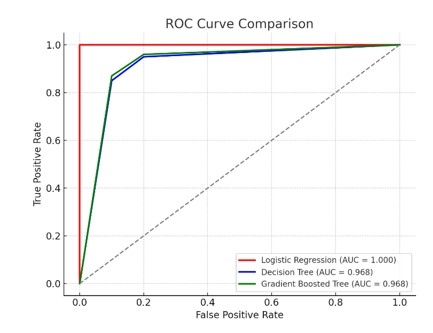
การวิจัยนี้มีวัตถุประสงค์เพื่อ 1) พัฒนาแบบจำลองการวิเคราะห์เชิงทำนายพฤติกรรมการซื้อของลูกค้า 2) ประเมินประสิทธิภาพของแบบจำลองที่พัฒนา และ 3) ประยุกต์ใช้แบบจำลองที่พัฒนาในการวิเคราะห์พฤติกรรมการซื้อของลูกค้า กรณีศึกษาร้านซูบีดแฮนด์เมดจิวเอลรี ผู้วิจัยได้พัฒนาแบบจำลองโดยใช้ 3 อัลกอริทึม ได้แก่ ต้นไม้ตัดสินใจ เกรเดียนต์บูสต์ทรี และการถดถอยโลจิสติก ร่วมกับการวิเคราะห์อาร์เอฟเอ็ม ซึ่งใช้ข้อมูลลูกค้าจำนวน 500 ราย ระหว่างเดือนมกราคม พ.ศ. 2566 ถึงเดือนธันวาคม พ.ศ. 2567 แบ่งตามลำดับเวลา (Time-Based Split) โดยใช้ข้อมูลในช่วงเวลาร้อยละ 80 สำหรับการฝึกแบบจำลอง และอีกร้อยละ 20 สำหรับการทดสอบ เพื่อป้องกันการรั่วไหลของข้อมูล และสะท้อนการใช้งานจริงในอนาคต ผลการวิจัยพบว่าแบบจำลองการถดถอยโลจิสติกให้ค่าความแม่นยำสูงสุดร้อยละ 100 ในทุกตัวชี้วัด ขณะที่แบบจำลองต้นไม้ตัดสินใจและแบบจำลองเกรเดียนต์บูสต์ทรี แม้มีวิธีการประมวลผลที่แตกต่างกันแต่ให้ค่าความแม่นยำเท่ากันที่ ร้อยละ 95.40 ผลการวิเคราะห์ ยังระบุว่าคะแนนอาร์เอฟเอ็มเป็นตัวแปรที่มีความสำคัญมากที่สุดในการทำนายพฤติกรรมการซื้อ โดยมีค่าน้ำหนักเฉลี่ยร้อยละ 19 ขณะเดียวกัน ผลการแบ่งกลุ่มลูกค้าชี้ให้เห็นว่า มีลูกค้า 458 ราย (ร้อยละ 91.60) มีแนวโน้มกลับมาซื้อซ้ำ และมีลูกค้า 42 ราย (ร้อยละ 8.40) ที่มีแนวโน้มไม่กลับมาซื้อซ้ำ ส่วนค่า ROC-AUC เฉลี่ยอยู่ในระดับสูงกว่า 0.95 ทั้งนี้ เมื่อพิจารณาลักษณะข้อมูลที่ไม่สมดุล (ลูกค้าซื้อซ้ำร้อยละ 91.60) ได้มีการประเมินเพิ่มเติมด้วยค่า Precision–Recall AUC (PR-AUC) และ Recall ซึ่งพบว่าตัวแปร RFM มีอิทธิพลสูงสุดในการพยากรณ์พฤติกรรมการซื้อของลูกค้า ผลลัพธ์ดังกล่าวสะท้อนให้เห็นว่าการบูรณาการ การวิเคราะห์อาร์เอฟเอ็มเข้ากับอัลกอริทึมการเรียนรู้ของเครื่องสามารถใช้เป็นแนวทางเชิงกลยุทธ์ที่มีประสิทธิภาพในการวิเคราะห์และจัดการพฤติกรรมลูกค้า โดยเฉพาะในธุรกิจขนาดเล็กด้านหัตถกรรม ซึ่งสามารถนำไปประยุกต์ใช้เพื่อสนับสนุนการวางแผนกลยุทธ์ทางการตลาดและการรักษาฐานลูกค้าได้อย่างเป็นระบบ
เอกสารอ้างอิง
เอกสิทธิ์ พัชรวงศ์ศักดา. (2566). วิทยาศาสตร์ข้อมูล (Data Science). นนทบุรี:สำนักพิมพ์บริษัท ไอดีซี พรีเมียร์ จำกัด.
Altair Engineering Inc. (2024). RapidMiner Studio system requirements and performance guidelines (Version 2024.1.0) [Technical documentation]. Retrieved from https://docs.rapidminer.com
Alghamdi, N. S., Prawira, N., Wella, W., and Natalia, F. (2024). Exploring the role of machine learning and big data analytics in business decision-making. JOIV: International Journal on Informatics Visualization, 8(4), 2314-2326. doi: 10.62577/joiv.v8i4.3244
Ashokan, G. (2023). Retail sales analysis and forecast using machine learning [Computer software]GitHub. Retrieved from https://github.com/gopiashokan/Retail-Sales-Analysis-and-Forecast-using-Machine-Learning[web:100]
Azad, M. S., Khan, S. S., Hossain, R., Rahman, R., and Momen, S. (2023). Predictive modeling of consumer purchase behavior on social media: Integrating theory of planned behavior and machine learning for actionable insights. PLoS ONE, 18(12), Article e0296336. doi: 10.1371/journal.pone.0296336
Baisani, A., Laohakiat, S., and Laohakiat, S. (2021). The study of customer segmentation by using RFM model and text analytics (Master’s thesis, Srinakharinwirot University). Retrieved from http://ir-ithesis.swu.ac.th/dspace/handle/123456789/108
Brüggemann, P., Martinez, L. F., and Martínez-López, F. J. (2025). The future of analytics in digital marketing and electronic commerce: How digitalization and sustainability affect consumers, firms, and policymakers. Journal of Marketing Analytics, 13, 571–573. doi: 10.1057/s41270-025-00422-6
Cerqueira, V., Torgo, L., and Mozetič, I. (2020). Evaluating time series forecasting models: An empirical study on rolling origin evaluation. Information Sciences, 512, 383–402. doi: 10.1016/j.ins.2019.10.034
Chen, D., Sain, S. L., and Guo, K. (2012). Data mining for the online retail industry: A case study of RFM model- based customer segmentation using data mining techniques. Journal of Database Marketing & Customer Strategy Management, 19(3), 197-208. doi: 10.1057/dbm.2012.17
Chuang, C. H., Wong, K. I., Kao, R. S., and Chang, C. J. (2017). Customer behavior analysis using RFM model and clustering techniques. Applied Sciences, 7(12), 1243. doi: 10.3390/app7121243
Efron, B., and Tibshirani, R. J. (1994). An introduction to the bootstrap. New York, NY: Chapman & Hall/CRC. Retrieved from https://doi.org/10.1201/9780429246593
Fader, P. S., and Hardie, B. G. S. (2013). RFM and CLV: Using behavioral data to manage customers for profit. SSRN Electronic Journal. Retrieved from https://doi:10.2139/ssrn.2324336
Hanley, J. A., and McNeil, B. J. (1982). The meaning and use of the area under a receiver operating characteristic (ROC) curve. Radiology, 143(1), 29–36. doi: 10.1148/radiology.143.1.7063747
He, H., and Garcia, E. (2009). Learning from imbalanced data. IEEE Transactions on Knowledge and Data Engineering, 21(9), 1263–1284. doi: 10.1109/TKDE.2008.239
Ho, T., Nguyen, S., Nguyen, H., Nguyen, N., Man, D-S., and Le, T-G. (2023). An extended RFM model for customer behaviour and demographic analysis in retail industry. Business Systems Research, 14(1), 45-67. doi: 10.2478/bsrj-2023-0004
Hosseini, S. M. S., Maleki, A., and Gholamian, M. R. (2010). Cluster analysis using data mining approach to develop CRM methodology to assess the customer loyalty. Expert Systems with Applications, 37(7), 5259-5264. doi: 10.1016/j.eswa.2009.12.070
Kapoor, S., and Narayanan, A. (2023). Leakage and the reproducibility crisis in machine-learning-based science. Patterns, 4(9), 100804. doi: 10.1016/j.patter.2023.100804
Kohavi, R. (1995). A study of cross-validation and bootstrap for accuracy estimation and model selection. In Proceedings of the 14th International Joint Conference on Artificial Intelligence (Vol. 2, pp. 1137–1145). Montreal, Canada: Morgan Kaufmann.
Munde, S., and Kaur, H. (2024). Predictive analytics in business: Current trends and future directions. Business Intelligence Journal, 15(1), 45-62.
Niculescu-Mizil, A., and Caruana, R. (2005). Predicting good probabilities with supervised learning. In Proceedings of the 22nd International Conference on Machine Learning (pp. 625–632). New York, NY: ACM Press.
Rahim, M. A. (2021). RFM-based repurchase behavior for customer classification and segmentation. Journal of Retailing and Consumer Services, 61, 102574. doi: 10.1016/j.jretconser.2021.102574
Ullah, A., Mohmand, M. I., Hussain, H., Johar, S., Khan, I., Ahmad, S., and Huda, S. (2023). Customer analysis using machine learning-based classification algorithms for effective segmentation using recency, frequency, monetary, and time. Sensors, 23(6), 3180. doi: 10.3390/s23063180
Wong, C.-G., Tong, G.-K., and Haw, S.-C. (2024). Exploring customer segmentation in e-commerce using RFM analysis with clustering techniques. Journal of Telecommunications and the Digital Economy, 12(3), 97–125. doi: 10.18080/jtde.v12n3.978
ดาวน์โหลด
เผยแพร่แล้ว
ฉบับ
ประเภทบทความ
สัญญาอนุญาต
ลิขสิทธิ์ (c) 2026 Loei Rajabhat University

อนุญาตภายใต้เงื่อนไข Creative Commons Attribution-NonCommercial-NoDerivatives 4.0 International License.
บทความที่ได้รับการตีพิมพ์



