LSTM-Based Approach for Predictive Link Monitoring and RRU Anomaly Detection in 4G/5G Networks
Keywords:
5G Technology, 4G Technology, LSTM, Imbalanced Data, Time SeriesAbstract
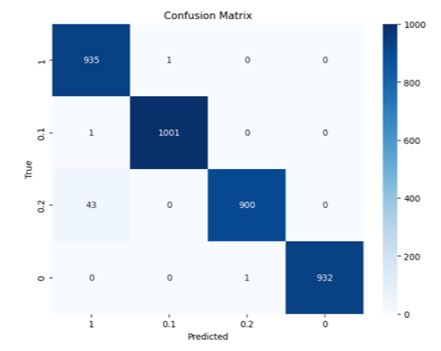
The increasing complexity of 4G and 5G networks has intensified the need for reliable and efficient telecommunication infrastructures. Remote Radio Units (RRUs) are crucial components responsible for ensuring seamless signal transmission between user devices and the core network. However, anomalies in RRU voltage and temperature can cause signal degradation, network inefficiencies, and potential failures. Traditional rule-based fault detection systems often struggle to adapt to dynamic network conditions, necessitating the integration of advanced deep learning models for proactive anomaly detection. Long Short-Term Memory (LSTM) networks have demonstrated superior capabilities in analyzing time-series data, making them well-suited for detecting performance anomalies in RRUs. However, a significant challenge in deploying these models is the class imbalance problem, where normal operational conditions vastly outnumber rare fault instances, leading to biased predictions and poor recall for minority-class anomalies. This research aims to determine the effectiveness of RandomOverSampler in improving the performance of LSTM-based anomaly detection models when applied to imbalanced RRU datasets in the context of 4G/5G network monitoring. To address this, a resampling strategy utilizing RandomOverSampler is implemented to balance the dataset, which consists of 5,000 time-series samples with two key features: voltage and temperature, ensuring improved detection of rare failures without introducing synthetic noise. The proposed framework processes sequential RRU voltage and temperature data, capturing temporal dependencies to improve failure predictions. Performance evaluations show that the minority-class recall improved from 33% to 99%, and the F1-score increased from 32% to 99% after resampling, effectively addressing a major limitation of conventional machine learning-based anomaly detection systems. The model also achieves an overall accuracy of 99%, demonstrating its robustness and suitability for real-world deployment in mobile network monitoring. Future work will focus on extending this framework to predict Radio Link Failure (RLF) based on RAW RRU data performance patterns.
References
Y. F. Li, C. Jia, J. Ye, and B. Xu, “On the reliability of 4G/5G mobile telecommunication networks from the perspective of operation & maintenance,” in 2021 Annual Reliability and Maintainability Symposium (RAMS), Orlando, United States, May 24-27, 2021, pp. 1-7.
J. M. de Oliveira Pereira, “A framework for 5G network data analytics function with emphasis on anomaly detection,” M.S. thesis, Graduate Program in Computer Science, Federal University of Minas Gerais, Belo Horizonte, Brazil, 2024.
Y. Wang, S. Meng, Y. Song, and D. Liu, “Fault detection for large scale indoor distributed antenna system based on time series similarity,” in 2022 Prognostics and Health Management Conference (PHM-2022 London), London, United Kingdom, May 27-29, 2022, pp. 269-275.
S. Wang, J. F. Balarezo, S. Kandeepan, A. Al-Hourani, K. G. Chavez, and B. Rubinstein, “Machine learning in network anomaly detection: A survey,” IEEE Access, vol. 9, pp. 152379-152396, November. 2021.
K. Ghosh, C. Bellinger, R. Corizzo, P. Branco, B. Krawczyk, and N. Japkowicz, “The class imbalance problem in deep learning,” Machine Learning, vol. 113, no. 7, pp. 4845-4901, December. 2022.
P. Vuttipittayamongkol, E. Elyan, and A. Petrovski, “On the class overlap problem in imbalanced data classification,” Knowledge-Based Systems, vol. 212, January. 2021.
T. Wongvorachan, S. He, and O. Bulut, “A comparison of undersampling, oversampling, and SMOTE methods for dealing with imbalanced classification in educational data mining,” Information, vol. 14, no. 1, January. 2023.
K. R. Balmuri, S. Konda, W.-C. Lai, P. B. Divakarachari, K. M. V. Gowda, and H. K. Lingappa, “A long short-term memory network-based radio resource management for 5G network,” Future Internet, vol. 14, no. 6, June. 2022.
Y. Wei, J. Jang-Jaccard, W. Xu, F. Sabrina, S. Camtepe, and M. Boulic, “LSTM-autoencoder-based anomaly detection for indoor air quality time-series data,” IEEE Sensors Journal, vol. 23, no. 4, pp. 3787-3800, February. 2023.
S. Aktaş, H. Alemdar, and S. Ergüt, “Towards 5G and beyond radio link diagnosis: Radio link failure prediction by using historical weather, link parameters,” Computers and Electrical Engineering, vol. 99, April. 2022.
S. K. Agarwal, S. Banerjee, and R. Mahapatra, “Prediction and recovery of radio link failure caused by environmental factors,” in 2022 IEEE 19th India Council International Conference (INDICON), Kochi, India, November 24-26, 2022, pp. 1-6.
W. Zhang, Y. Li, M. Wen, and R. He, “Comparative study of ensemble learning methods in just-in-time software defect prediction,” in 2023 IEEE 23rd International Conference on Software Quality, Reliability, and Security Companion (QRS-C), Chiang Mai, Thailand, October 22-26, 2023, pp. 83-92.
K. Murphy, A. Lavignotte, and C. Lepers, “Fault prediction for heterogeneous telecommunication networks using machine learning: a survey,” IEEE Transactions on Network and Service Management, vol. 21, no. 2, pp. 2515-2538, April. 2024.
A. Pourmahboubi and H. Tabrizchi, “LSTM-based framework for 5G resource allocation prediction,” in 2024 11th International Symposium on Telecommunications (IST), Tehran, Iran, October 9-10, 2024, pp. 295-302.
S. Barmpounakis, L. Magoula, N. Koursioumpas, R. Khalili, J. M. Perdomo, and R. P. Manjunath, “LSTM-based QoS prediction for 5G-enabled connected and automated mobility applications,” in 2021 IEEE 4th 5G World Forum (5GWF), Montreal, Canada, October 13-15, 2021, pp. 436-440.
J. Lin, et al., “Multi-scenario cellular KPI prediction based on spatiotemporal graph neural network,” IEEE Transactions on Automation Science and Engineering, vol. 22, pp. 5131-5142, June. 2024.
F. Nhita and I. Kurniawan, “Performance and statistical evaluation of three sampling approaches in handling binary imbalanced data sets,” in 2023 International Conference on Data Science and Its Applications (ICoDSA), Bandung, Indonesia, August 9-10, 2023, pp. 420-425.
N. V. Chawla, K. W. Bowyer, L. O. Hall, and W. P. Kegelmeyer, “SMOTE: synthetic minority over-sampling technique,” Journal of Artificial Intelligence Research, vol. 16, pp. 321-357, June. 2002.
H. He, Y. Bai, E. A. Garcia, and S. Li, “ADASYN: adaptive synthetic sampling approach for imbalanced learning,” in 2008 IEEE International Joint Conference on Neural Networks (IEEE World Congress on Computational Intelligence), Hong Kong, China, June 1-8, 2008, pp. 1322-1328.
F. Kamalov, H. H. Leung, and A. K. Cherukuri, “Keep it simple: random oversampling for imbalanced data,” in 2023 Advances in Science and Engineering Technology International Conferences (ASET), Dubai, United Arab Emirates, February 20-23, 2023, pp. 1-4.
G. E. A. P. A. Batista, R. C. Prati, and M. C. Monard, “A study of the behavior of several methods for balancing machine learning training data,” ACM SIGKDD Explorations Newsletter, vol. 6, no. 1, pp. 20-29, June. 2004.
A. Massaro, D. Kostadinov, A. Silva, A. O. Guzman, and A. Aghasaryan, “Predicting network hardware faults through layered treatment of alarms logs,” Entropy, vol. 25, no. 6, June. 2023.
L. Sana, et al., “Securing the IoT cyber environment: Enhancing intrusion anomaly detection with vision transformers,” IEEE Access, vol. 12, pp. 82443-82468, May. 2024.
Downloads
Published
How to Cite
License
Copyright (c) 2025 NKRAFA JOURNAL OF SCIENCE AND TECHNOLOGY

This work is licensed under a Creative Commons Attribution-NonCommercial-NoDerivatives 4.0 International License.
- Content and information in articles published in NKRAFA Journal of Science and Technology are comment and responsibility of authors of articles directly. Journal editorial do no need to agree or share any responsibility.
- NKRAFA Journal of Science and Technology Articles holds the copyright of the content, pictures, images etc. which published in it. If any person or agency require to reuse all or some part of articles, the permission must be obtained from the NKRAFA Journal of Science and Technology.