
A Prediction System for Undergraduate Student Dropout at Faculty of Science, Buriram Rajabhat University using Data Mining Techniques.
Article Sidebar
Main Article Content
Abstract
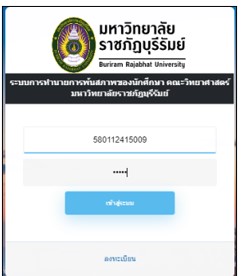
This research aims to 1) create a prediction model for students’ dropout in higher education, and 2) develop a prediction system for students’ dropout in higher education. To analyze 3,650 datasets of undergraduate students at the faculty of science, Buriram Rajabhat University who were admitted between 2013 and 2018. To use the Weka software with the decision tree classifier and J48 algorithm to create the prediction model for students’ dropout and evaluate the model using a 10-fold cross validation method. The prediction model had incorporated in the prediction system development for students’ dropout in higher education. The development tools were PHP, HTML, JavaScript, CSS, and MySql DBMS. The prediction system had developed in the form of a Web application.
The study results found that the prediction model for students’ dropout had 11 associative factors: major, 6 GPAXs (6 academic terms), GPA from high school, major in high school, school size, and scholarship loan. The model had the values in 95.57% of accuracy, 94.50% of precision, and 95.60% of recall. The use of the prediction system by the advisors and the students found that in a high level of satisfaction ( = 3.68, S.D. = 0.58).
Article Details
เนื้อหาและข้อมูลในบทความที่ลงตีพิมพ์ในวารสารวารสารวิทยาศาสตร์และเทคโนโลยีถือเป็นข้อคิดเห็นและความรับผิดชอบของผู้เขียนบทความโดยตรงซึ่งกองบรรณาธิการวารสาร ไม่จำเป็นต้องเห็นด้วย หรือร่วมรับผิดชอบใด ๆ
บทความ ข้อมูล เนื้อหา รูปภาพ ฯลฯ ที่ได้รับการตีพิมพ์ในวารสารวารสารวิทยาศาสตร์และเทคโนโลยีถือเป็นลิขสิทธิ์ของวารสารวารสารวิทยาศาสตร์และเทคโนโลยีหากบุคคลหรือหน่วยงานใดต้องการนำทั้งหมดหรือส่วนหนึ่งส่วนใดไปเผยแพร่ต่อหรือเพื่อกระทำการใด ๆ จะต้องได้รับอนุญาตเป็นลายลักษณ์อักษรจากวารสารวารสารวิทยาศาสตร์และเทคโนโลยี ก่อนเท่านั้น
References
ชณิดาภา บุญประสม และจรัญ แสนราช. (2561). “การวิเคราะห์การทํานายการลาออกกลางคันของนักศึกษา ระดับปริญญาตรีโดยใช้เทคนิควิธีการทําเหมืองข้อมูล”. วารสารวิชาการครุศาสตร์อุตสาหกรรม พระจอมเกล้าพระนครเหนือ ปีที่ 9 ฉบับที่ 1 มกราคม - เมษายน 2561. หน้า 142 – 151.
นนทวัฒน์ ทวีชาติ อรยา เพ็งประจญ วิไลรัตน์ ยาทองไชย และชูศักดิ์ ยาทองไชย. (2562). การวิเคราะห์ปัจจัยที่มีผลต่อการพ้นสภาพของนักศึกษาระดับปริญญาตรี ด้วยเทคนิคการทำเหมืองข้อมูล. ในงานประชุมวิชาการ “การประชุมวิชาการระดับชาติการจัดการเทคโนโลยีและนวัตกรรม ครั้งที่ 5 มหาวิทยาลัยราชภัฏมหาสารคาม จังหวัดมหาสารคาม” 5 มีนาคม 2562.
ปรีชา บุญรอด. (2541). มาตรวัดการวิจัยทางสังคมศาสตร์ (ตอนที่ 2). จาก : http://www.journal.au.edu/abac_newsletter/1998/june98/scale.html.
พฤฒิพงศ์ เพ็งศิริ, พันธนา ก้อนเชื้อรัตน์, ชัชฏา ชวรางกูร และอัจฉราพรรณ คชเดช. (2556). “การวิเคราะห์ความสัมพันธ์ของปัจจัยข้อมูลนักศึกษาที่มีผลต่อระดับผลการเรียนด้วยเทคนิคต้นไม้ตัดสินใจ กรณีศึกษา นักศึกษามหาวิทยาลัยเทคโนโลยีราชมงคลสุวรรณภูมิ”. บทความวิจัยคณะวิทยาศาสตร์และเทคโนโลยี มหาวิทยาลัยเทคโนโลยีราชมงคลสุวรรณภูมิ. พระนครศรีอยุธยา.
G.W. Dekker, M. Pechenizkiy, and J.M. Vleeshouwers, Predicting students drop out: a Case study. In T. Barnes, M. Desmarais, C. Romero, and S. Ventura, editors, In “Proceedings of the 2nd International Conference on Educational Data Mining”, 2009, pp.41-50.
J. F. Superby, J. P. Vandamme, and N. Meskens. Determination of factors influencing the achievement of the first-year university students using data mining methods, In “Proceedings of 8th International Conference on Intelligent Tutoring Systems”, 2006, pp. 37-44.
M. Jadrić, Ž. Garača, and M. Ćukušić, Student dropout analysis with application of data mining methods, Management, Vol.15, No.1, 2010, pp. 31-46
Q.A. Al-Radaideh, E.M. Al-Shawakfa, and M.I. Al-Najjar, Mining student data using decision trees, In “Proceedings of International Arab Conference on Information Technology”, 2006, pp.1-5.
S. Kotsiantis, Educational Data Mining: “A Case Study for Predicting Dropout – Prone Students”. International Journal of Knowledge Engineering and Soft Data Paradigms, Vol.1, No.2, 2009, pp.101–111.
U. Fayadd, G. Piatesky-Shapiro, and P. Smyth, From data mining to knowledge discovery in databases, AI Magazine, Vol.17, No.3, 1996, pp.37-54.
